




 全部商品分类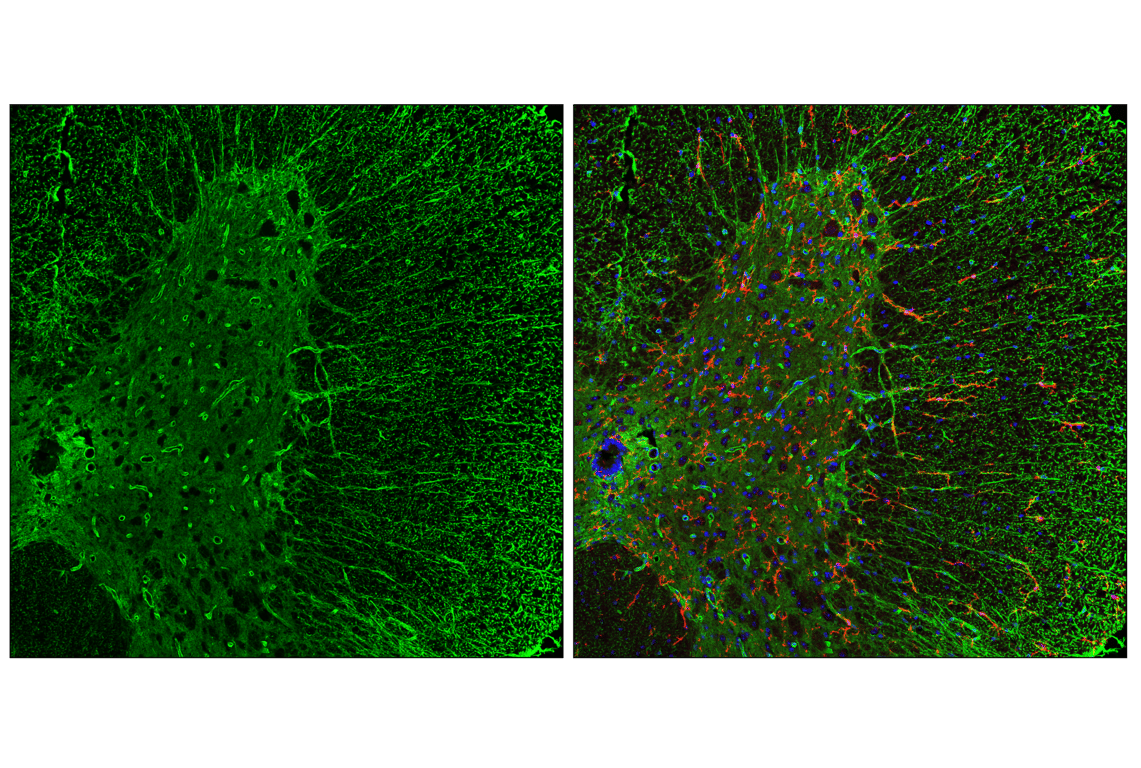


1/4


 用小程序,查商品更便捷





产品介绍
产品介绍
产品信息
荧光素标记
Unconjugated

来源纯化
Monoclonal antibody is produced by immunizing animals with a synthetic peptide corresponding to residues near the carboxy terminus of human AQP4 protein.
宿主
Mouse
商品描述
Product Usage Information
| Application | Dilution |
|---|---|
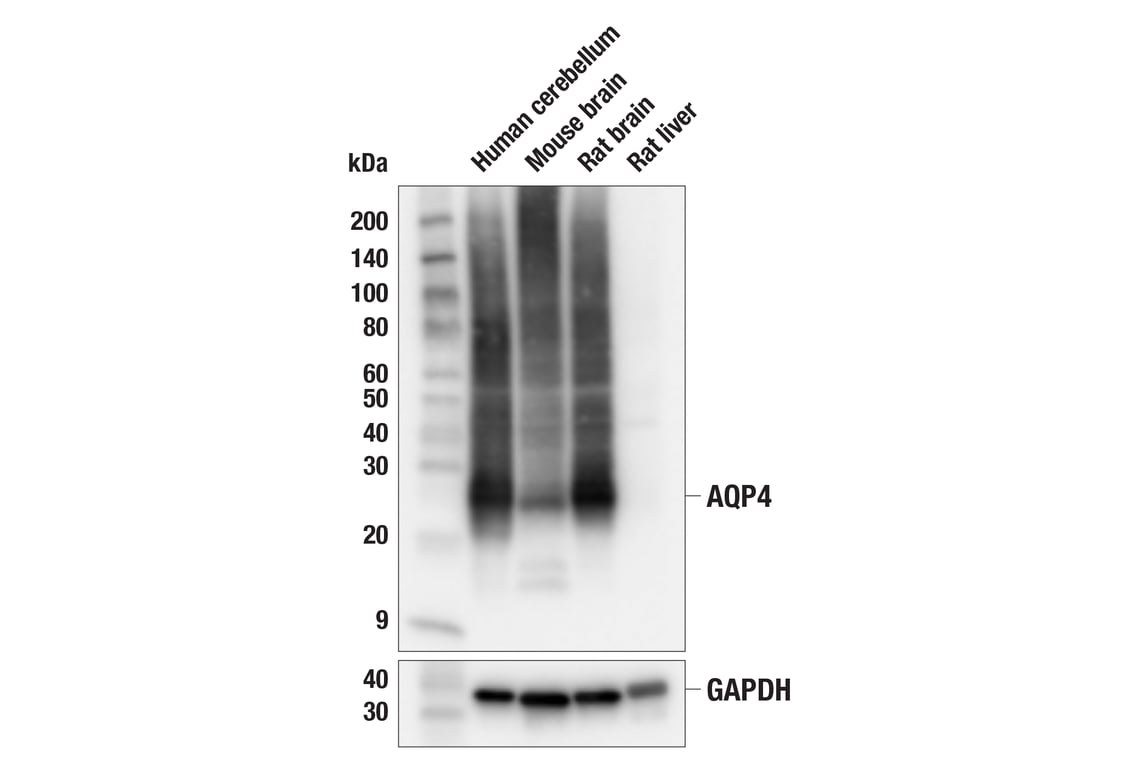
| Western Blotting | 1:1000 |
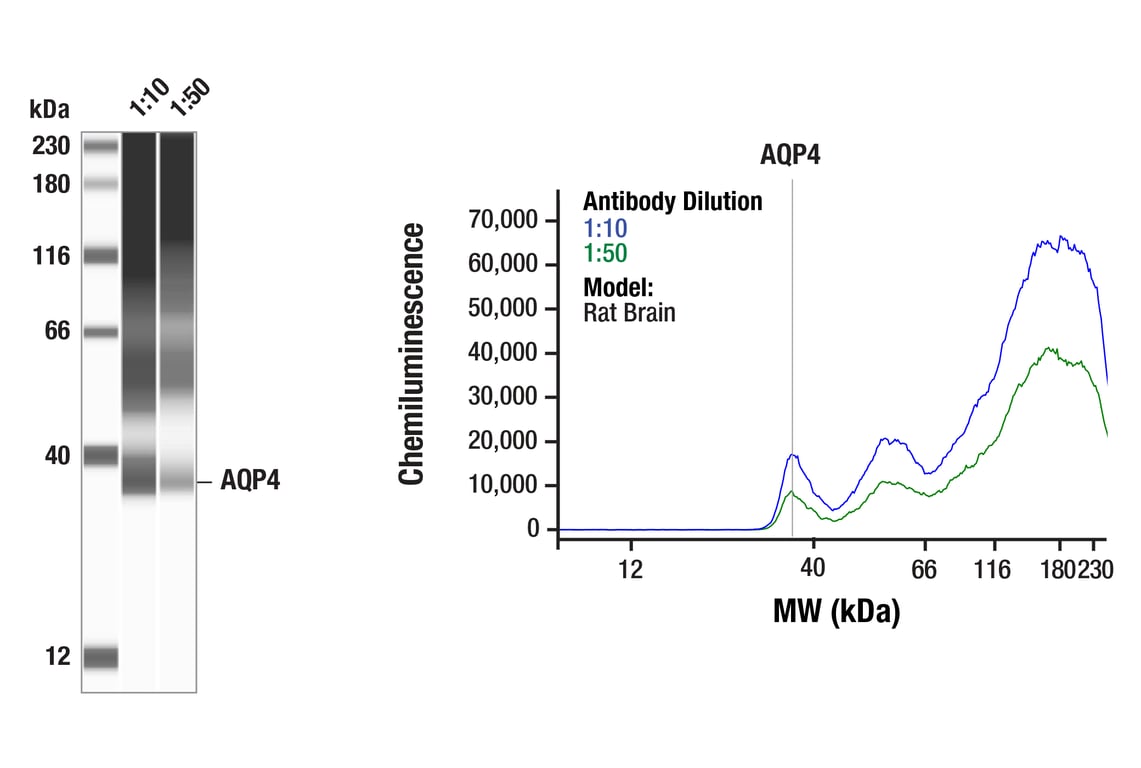
| Simple Western™ | 1:10 - 1:50 |
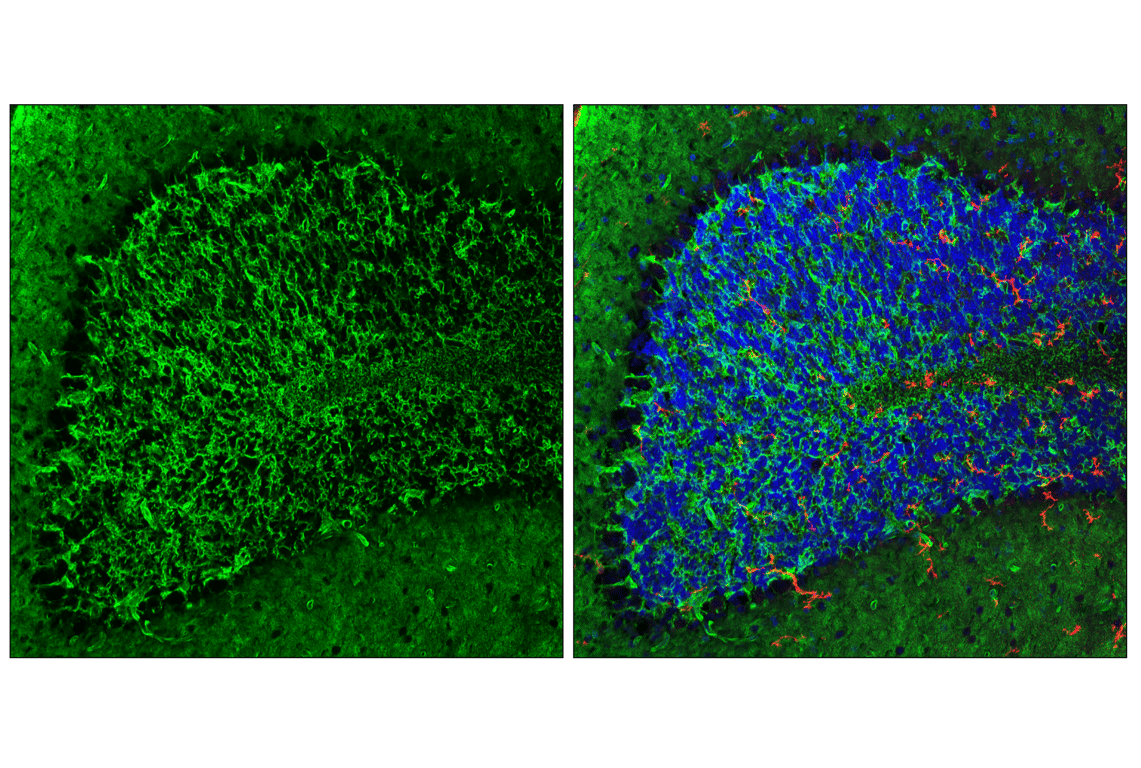
| Immunofluorescence (Frozen) | 1:50 - 1:100 |
同种型
Mouse IgG1 kappa
分子量
28
应用
目标/特异性
Specificity/Sensitivity
AQP4 (E8W5A) Mouse mAb recognizes endogenous levels of total AQP4 protein.
Species Reactivity:
Human, Mouse, Rat
敏感性
Endogenous
背景
背景
Aquaporins (AQPs) are integral membrane proteins that serve as channels to transfer water and small solutes across the membrane. There are 13 isoforms of AQP that are expressed in different types of cells and tissues (1,2). AQP1 is found in blood vessels, kidney, eye, and ear. AQP2 is found in the kidney, and it has been shown that the lack of AQP2 results in diabetes (1,3). AQP4 is present in the brain, where it is enriched in astrocytes (1,2,4). AQP5 is found in the salivary and lacrimal gland, AQP6 in intracellular vesicles in the kidney, AQP7 in adipocytes, AQP8 in kidney, testis, and liver, AQP9 is present in liver and leukocytes, and AQP10-11 in the intestine (1,3,4). AQPs are essential for the function of cells and organs. It has been shown that AQP1 and AQP4 regulate water homeostasis in astrocytes, preventing cerebral edema caused by solute imbalance (5). Several studies have shown the involvement of AQPs in the development of inflammatory processes, including innate and adaptive cell immunity (6,7).AQP4 is expressed in brain cells, including neurons, but enriched in astrocytes, as well as in the peripheral nervous system (4,7). AQP4 influences synaptic plasticity, and the lack of this protein in the brain may cause memory and learning impairment via glutamate transporter 1 (GLT1) in Alzheimer's disease (8-10). It's suggested that AQP4 could play a role in the clearance of β-amyloid, and it may influence the transport of potassium and calcium in Alzheimer's disease (8,9). In Parkinson's disease, the lack of AQP4 results in an increased susceptibility of neurons from the substantia nigra and the ventral tegmental area for MPTP (11).
1.Takata, K. et al. (2004) Prog Histochem Cytochem 39, 1-83.
2.Echevarría, M. and Ilundáin, A.A. (1998) J Physiol Biochem 54, 107-18.
3.Gomes, A. et al. (2018) Front Chem 6, 238.
4.Xu, M. et al. (2017) Adv Exp Med Biol 969, 81-103.
5.Kobayashi, H. et al. (2004) J Pharmacol Sci 96, 264-70.
6.Meli, R. et al. (2018) Front Physiol 9, 101.
7.Ishibashi, K. et al. (1998) Biochem Biophys Res Commun 244, 268-74.
8.Hubbard, J.A. et al. (2018) Brain Res Bull 136, 118-129.
9.Lan, Y.L. et al. (2016) Neural Plast 2016, 4626593.
10.Lan, Y.L. et al. (2016) Mol Neurobiol 53, 5300-9.
11.Zhang, J. et al. (2016) Neurosci Lett 614, 7-15.
制备和贮存
保存方式
Supplied in 10 mM sodium HEPES (pH 7.5), 150 mM NaCl, 100 µg/mL BSA, 50% glycerol, and less than 0.02% sodium azide. Store at –20°C. Do not aliquot the antibody.
数据库链接
Entrez-Gene ID
361
UniProt ID
P55087
声明 :本官网所有报价均为常温或者蓝冰运输价格,如有产品需要干冰运输,需另外加收干冰运输费。