




 全部商品分类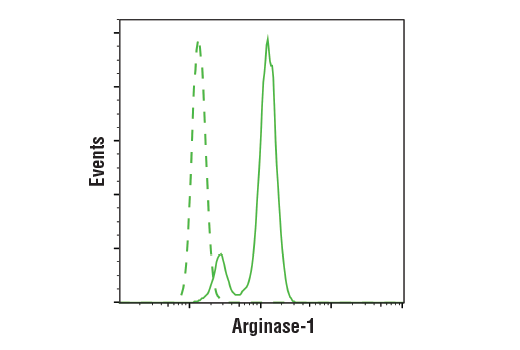
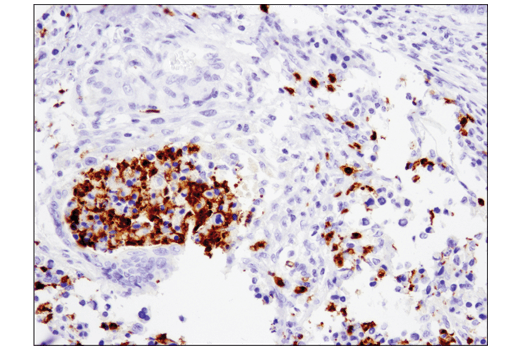
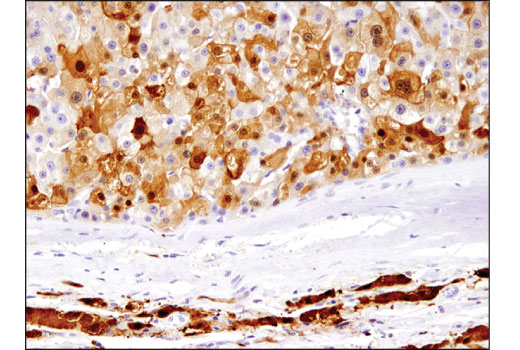
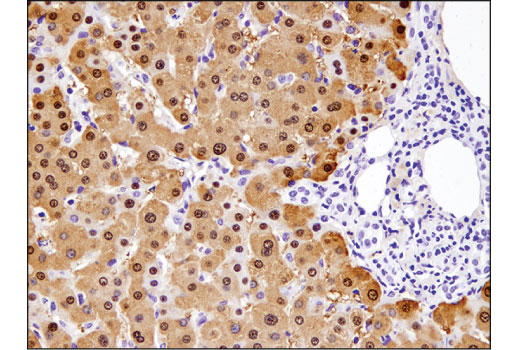
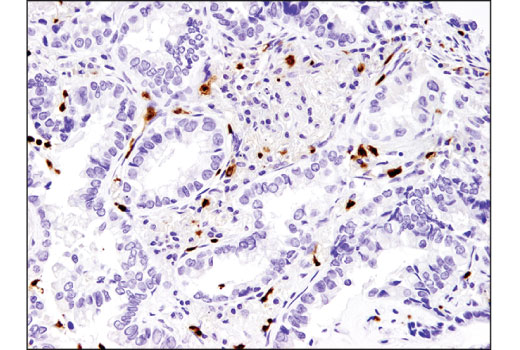
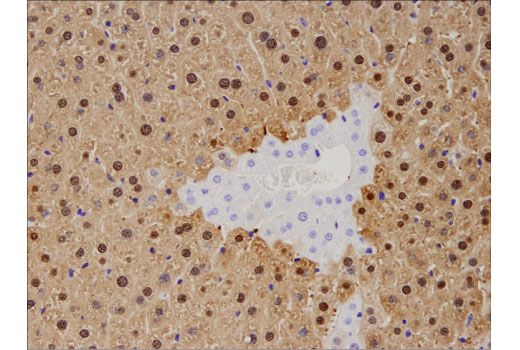
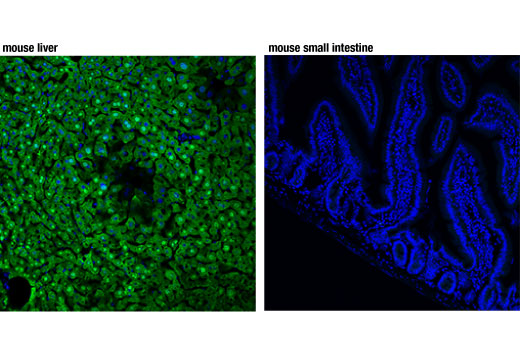
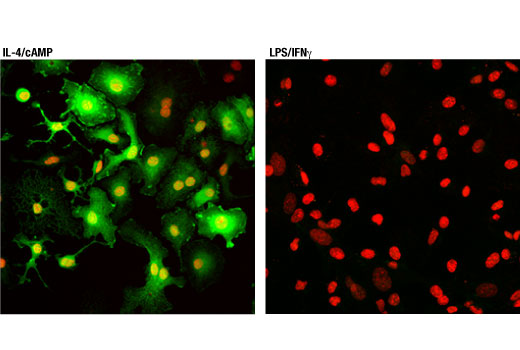


1/11


 用小程序,查商品更便捷





产品介绍
产品介绍
产品信息
荧光素标记
Unconjugated

抗原名称
Arginase-1
来源纯化
Monoclonal antibody is produced by immunizing animals with a synthetic peptide corresponding to residues surrounding Val47 of human arginase-1 protein.
宿主
Rabbit
商品描述
Product Usage Information
| Application | Dilution |
|---|---|
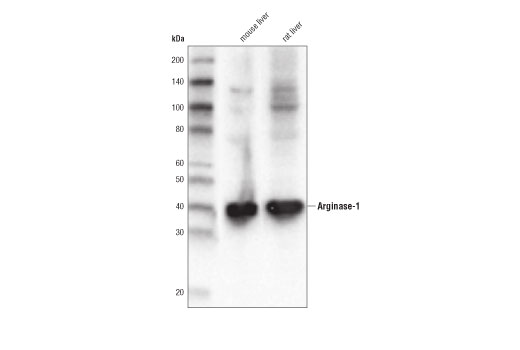
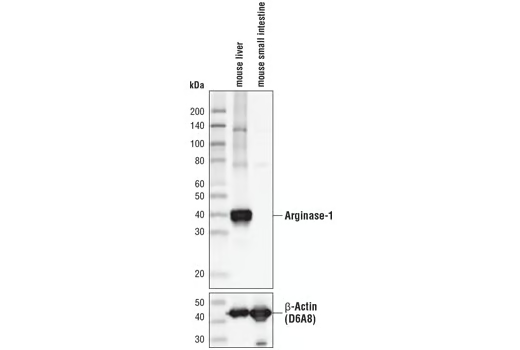
| Western Blotting | 1:1000 |
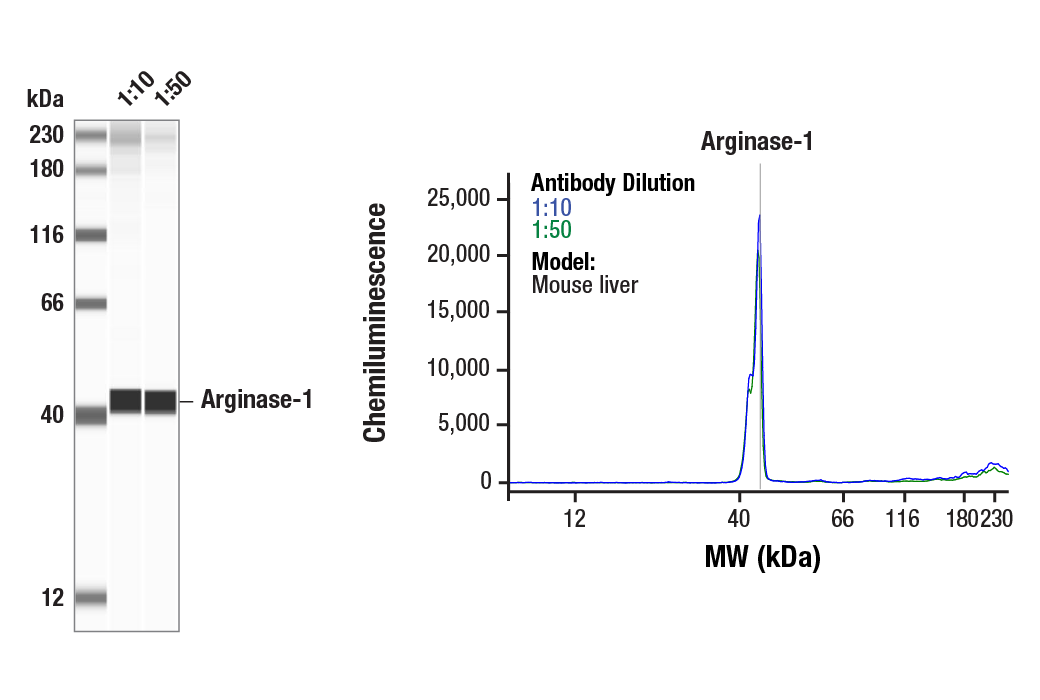
| Simple Western™ | 1:10 - 1:50 |
| IHC Leica Bond | 1:200 - 1:800 |
| Immunohistochemistry (Paraffin) | 1:50 - 1:200 |
| Immunofluorescence (Frozen) | 1:50 - 1:200 |
| Immunofluorescence (Immunocytochemistry) | 1:50 - 1:200 |
| Flow Cytometry (Fixed/Permeabilized) | 1:50 |
同种型
Rabbit IgG
分子量
40
研究领域
癌症,代谢,神经科学
应用
反应种属
Human,Mouse,Rat,
目标/特异性
Specificity/Sensitivity
Arginase-1 (D4E3M™) XP Rabbit mAb recognizes endogenous levels of total arginase-1 protein. This antibody does not cross-react with arginase-2.
Species Reactivity:
Human, Mouse, Rat
敏感性
Endogenous
背景
背景
L-arginine plays a critical role in regulating the immune system (1-3). In inflammation, cancer, and certain other pathological conditions, myeloid cell differentiation is inhibited leading to a heterogeneous population of immature myeloid cells, known as myeloid-derived suppressor cells (MDSCs). MDSCs are recruited to sites of cancer-associated inflammation and express high levels of arginase-1 (4). Arginase-1 catalyzes the final step of the urea cycle converting L-arginine to L-ornithine and urea (5). Thus, MDSCs increase the catabolism of L-arginine resulting in L-arginine depletion in the inflammatory microenvironment of cancer (4,6). The reduced availability of L-arginine suppresses T cell proliferation and function and thus contributes to tumor progression (4,6). Arginase-1 is of great interest to researchers looking for a therapeutic target to inhibit the function of MDSCs in the context of cancer immunotherapy (7). In addition, research studies have demonstrated that arginase-1 distinguishes primary hepatocellular carcinoma (HCC) from metastatic tumors in the liver, indicating its value as a potential biomarker in the diagnosis of HCC (8,9).
1.Albina, J.E. et al. (1989) J Exp Med 169, 1021-9.
2.Mills, C.D. (2001) Crit Rev Immunol 21, 399-425.
3.Rodriguez, P.C. et al. (2004) Cancer Res 64, 5839-49.
4.Gabrilovich, D.I. and Nagaraj, S. (2009) Nat Rev Immunol 9, 162-74.
5.Wu, G. and Morris, S.M. (1998) Biochem J 336 (Pt 1), 1-17.
6.Raber, P. et al. (2012) Immunol Invest 41, 614-34.
7.Wesolowski, R. et al. (2013) J Immunother Cancer 1, 10.
8.Sang, W. et al. (2015) Tumour Biol 36, 3881-6.
9.Geramizadeh, B. and Seirfar, N. (2015) Hepat Mon 15, e30336.
研究领域
癌症,代谢,神经科学
翻译后修饰
unmodified
制备和贮存
保存方式
Supplied in 10 mM sodium HEPES (pH 7.5), 150 mM NaCl, 100 µg/ml BSA, 50% glycerol and less than 0.02% sodium azide. Store at –20°C. Do not aliquot the antibody.
For a carrier free (BSA and azide free) version of this product see product #89872.
数据库链接
Entrez-Gene ID
383
UniProt ID
P05089
声明 :本官网所有报价均为常温或者蓝冰运输价格,如有产品需要干冰运输,需另外加收干冰运输费。