




 全部商品分类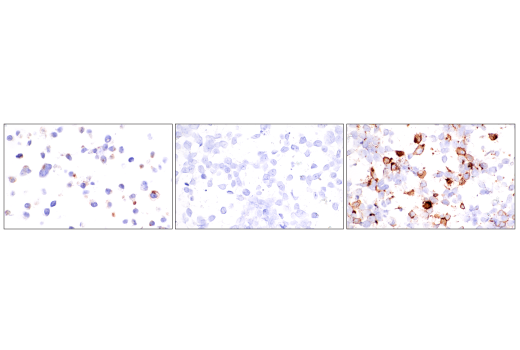
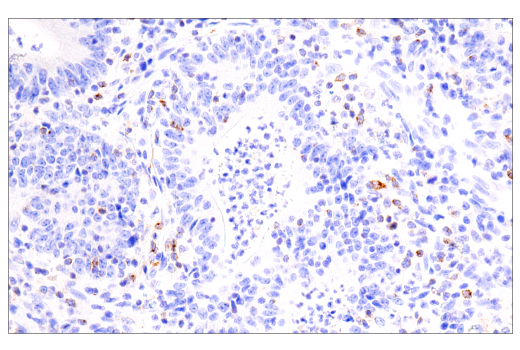
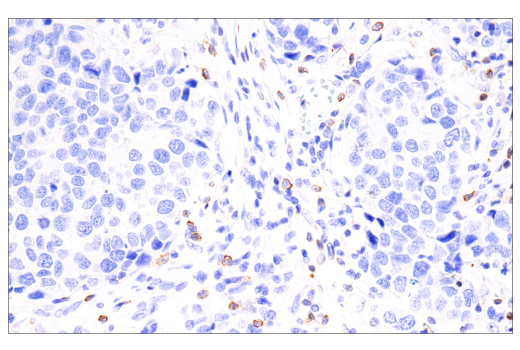
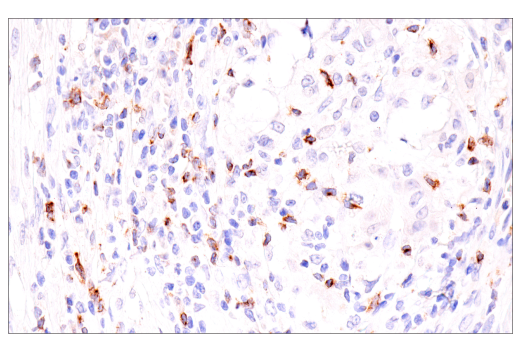
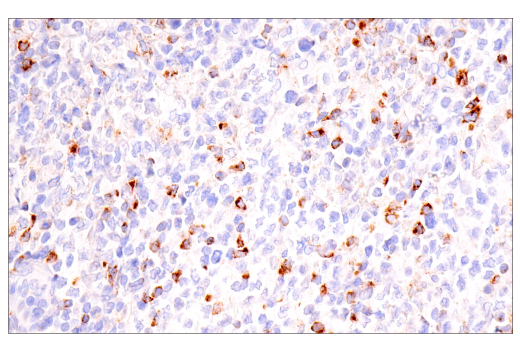
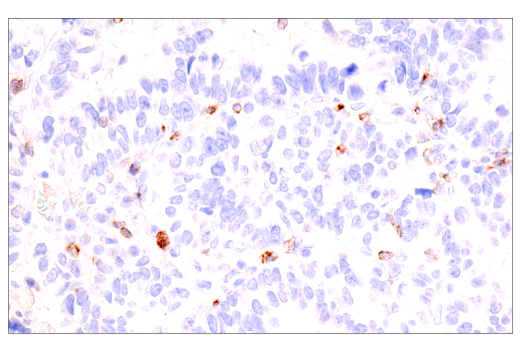
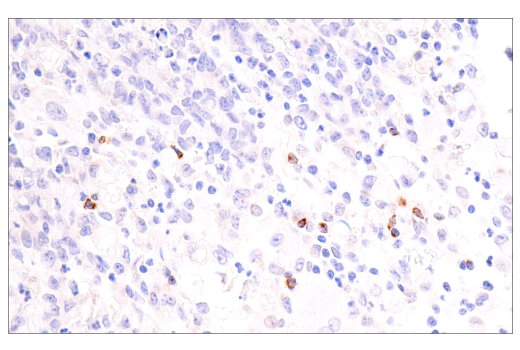
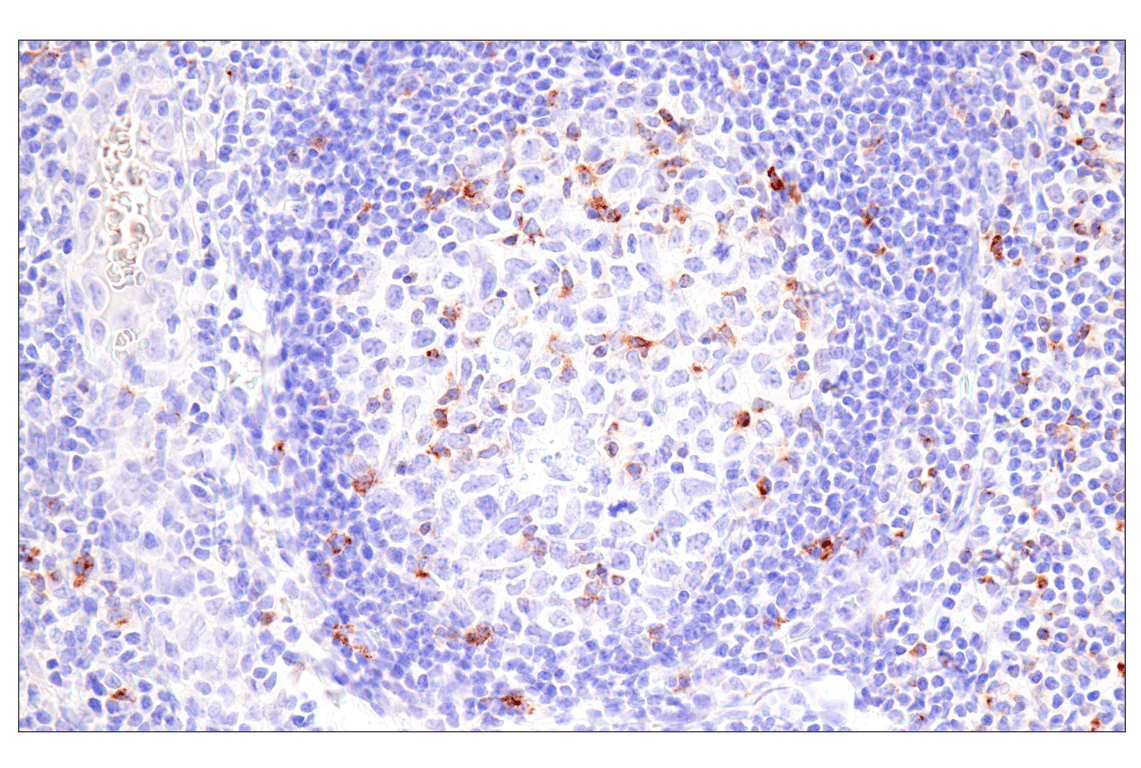
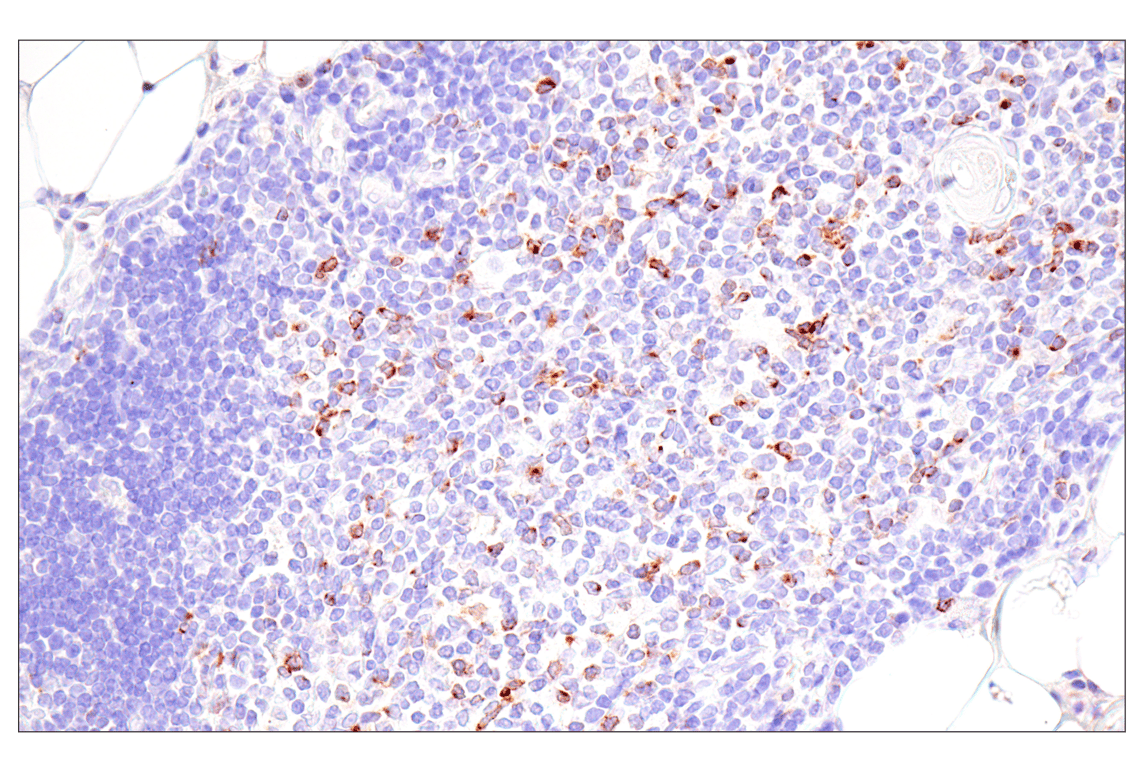
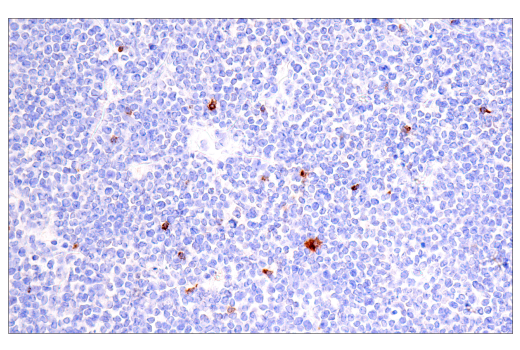
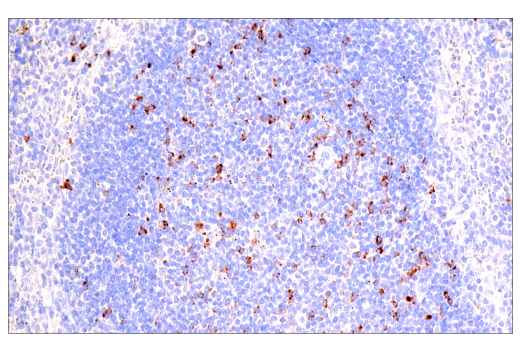
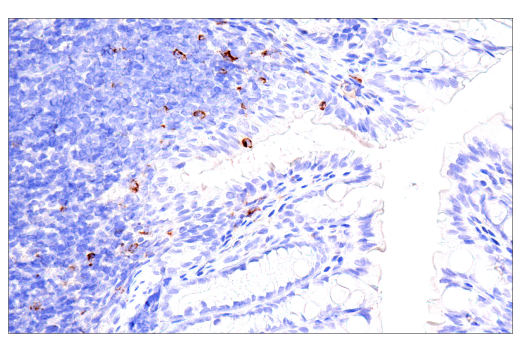
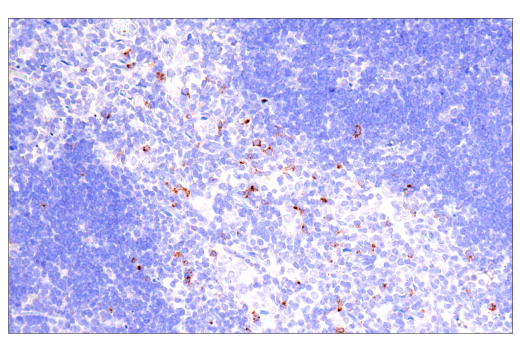


1/17


 用小程序,查商品更便捷





产品介绍
产品介绍
产品信息
荧光素标记
Unconjugated

抗原名称
CTLA-4
来源纯化
Monoclonal antibody is produced by immunizing animals with a synthetic peptide corresponding to residues surrounding Gln216 of human CTLA-4 protein.
宿主
Rabbit
商品描述
Product Usage Information
| Application | Dilution |
|---|---|
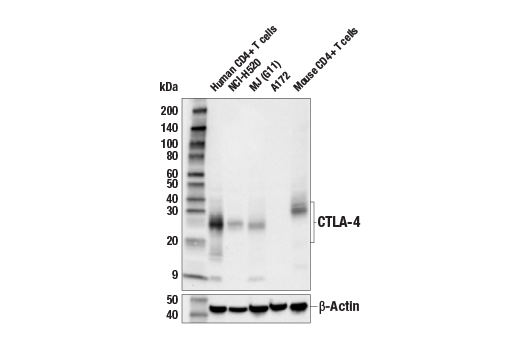
| Western Blotting | 1:1000 |
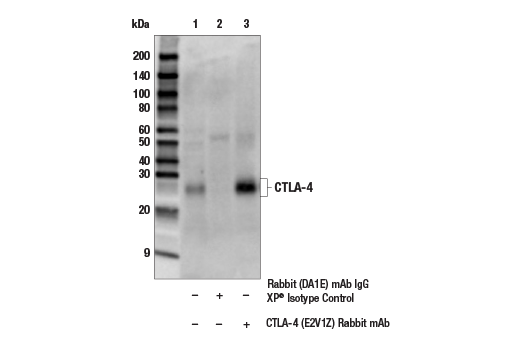
| Immunoprecipitation | 1:50 |
| IHC Leica Bond | 1:50 - 1:200 |
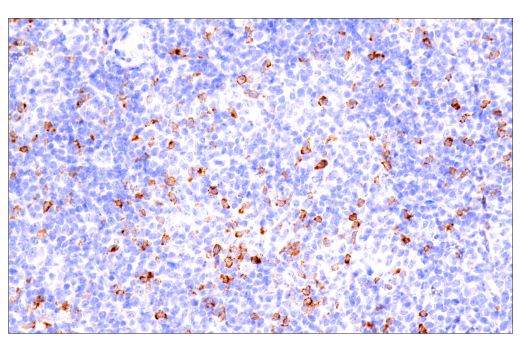
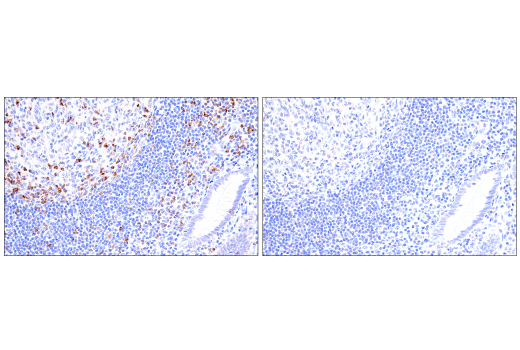
| Immunohistochemistry (Paraffin) | 1:100 - 1:400 |
同种型
Rabbit IgG
分子量
25-30
研究领域
癌症,免疫学和肿瘤学,
应用
反应种属
Human,Mouse,
目标/特异性
Specificity/Sensitivity
CTLA-4 (E2V1Z) Rabbit mAb recognizes endogenous levels of total CTLA-4 protein. Non-specific staining was observed in mouse and human normal and neoplastic liver, in human normal kidney, and in mouse stomach crypts.
Species Reactivity:
Human, Mouse
敏感性
Endogenous
背景
背景
Cytotoxic T-lymphocyte protein 4 (CTLA-4, CD152) is an Ig superfamily member that negatively regulates early T cell activation (1-4). The CTLA-4 protein is primarily expressed on T cells, including CD8+ cytotoxic T cells, CD4+ helper T cells, and CD4+/FoxP3+ regulatory T cells (1,2). CTLA-4 protein competes with CD28 for B7.1 (CD80) and B7.2 (CD86) binding at the cell surface, which results in the downregulation of T cell activity (5). The activation of SHP-2 and PP2A downstream of CTLA-4 attenuates TCR signaling (6). Research studies indicate that CTLA4 knockout mice display lymphoproliferative disorders leading to early death, confirming the role of CTLA-4 as a negative regulator of T cells (7). Mutations in the corresponding CTLA4 gene are associated with multiple disorders, including insulin-dependent diabetes mellitus, Graves' disease, Hashimoto thyroiditis, celiac disease, systemic lupus erythematosus, and type V autoimmune lymphoproliferative syndrome (8,9). Additional studies demonstrate that CTLA-4 blockade is an effective strategy for tumor immunotherapy (10-12).
1.Brunet, J.F. et al. (1987) Nature 328, 267-70.
2.Brunet, J.F. et al. (1988) Immunol Rev 103, 21-36.
3.Dariavach, P. et al. (1988) Eur J Immunol 18, 1901-5.
4.Linsley, P.S. (1995) J Exp Med 182, 289-92.
5.Collins, A.V. et al. (2002) Immunity 17, 201-10.
6.Rudd, C.E. et al. (2009) Immunol Rev 229, 12-26.
7.Waterhouse, P. et al. (1995) Science 270, 985-8.
8.Romo-Tena, J. et al. (2013) Autoimmun Rev 12, 1171-6.
9.Wang, J. et al. (2014) PLoS One 9, e85982.
10.Egen, J.G. et al. (2002) Nat Immunol 3, 611-8.
11.Hodi, F.S. et al. (2003) Proc Natl Acad Sci U S A 100, 4712-7.
12.Pardoll, D.M. (2012) Nat Rev Cancer 12, 252-64.
研究领域
癌症,免疫学和肿瘤学,
翻译后修饰
unmodified
制备和贮存
保存方式
Supplied in 10 mM sodium HEPES (pH 7.5), 150 mM NaCl, 100 µg/ml BSA, 50% glycerol and less than 0.02% sodium azide. Store at –20°C. Do not aliquot the antibody.
For a carrier free (BSA and azide free) version of this product see product #26893.
For a carrier free (BSA and azide free) version of this product see product #55226.
数据库链接
Entrez-Gene ID
1493
UniProt ID
P16410
声明 :本官网所有报价均为常温或者蓝冰运输价格,如有产品需要干冰运输,需另外加收干冰运输费。