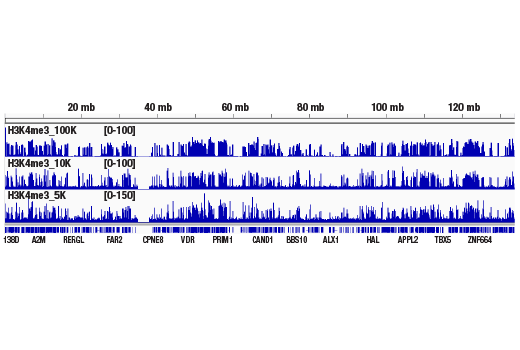
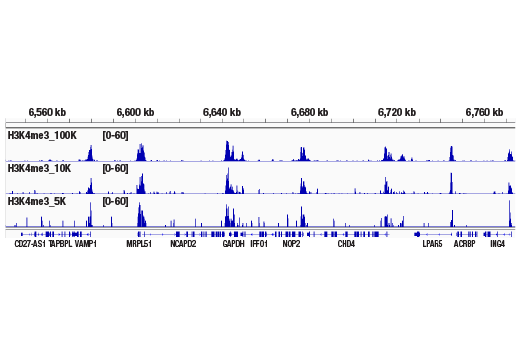
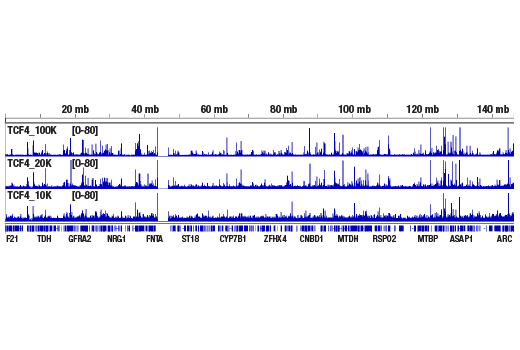
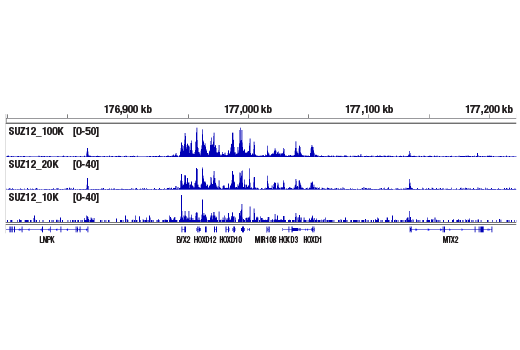
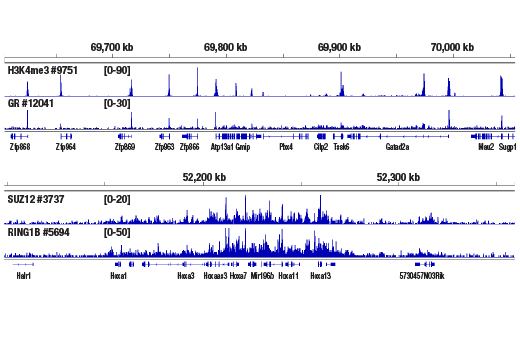
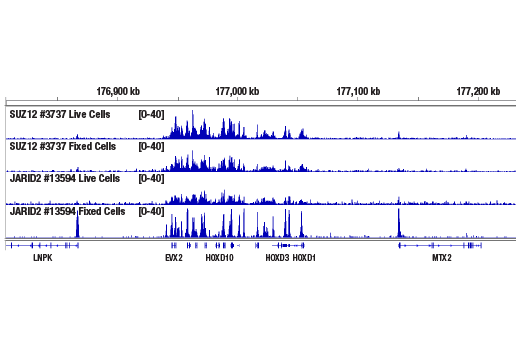
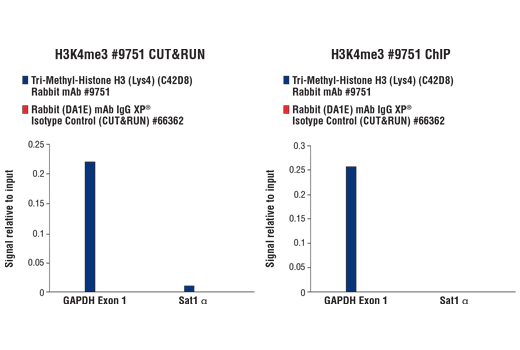
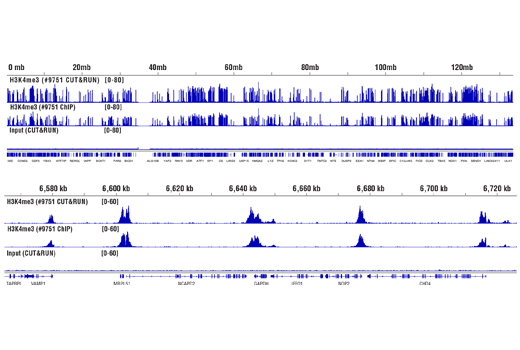
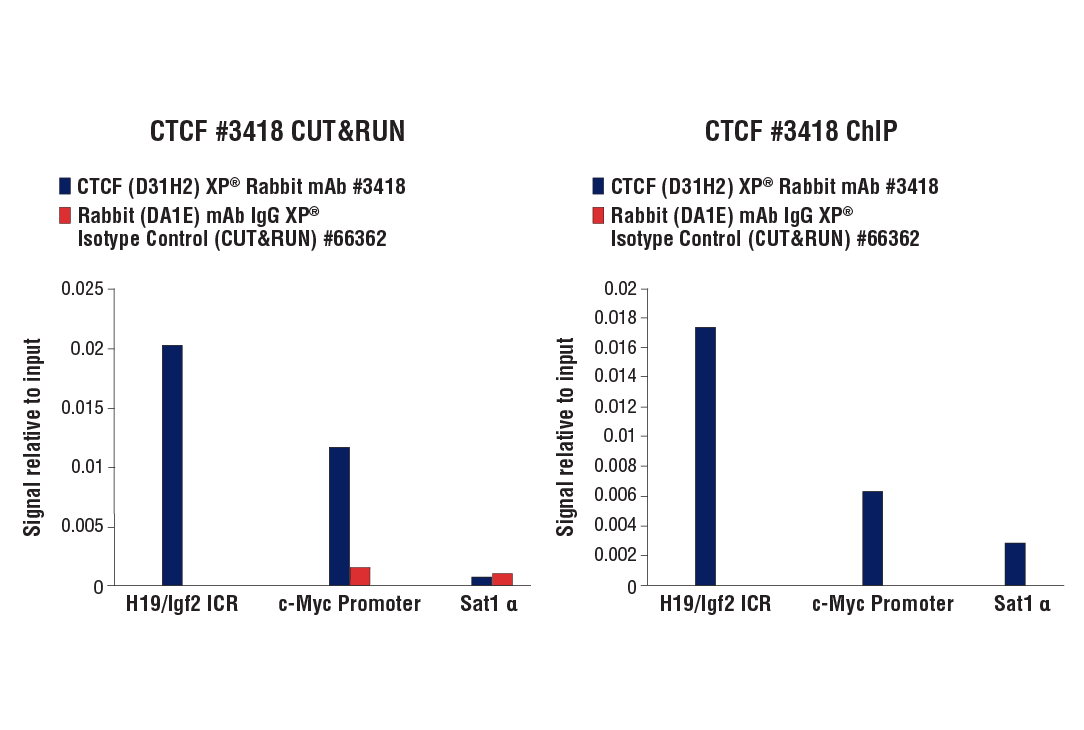
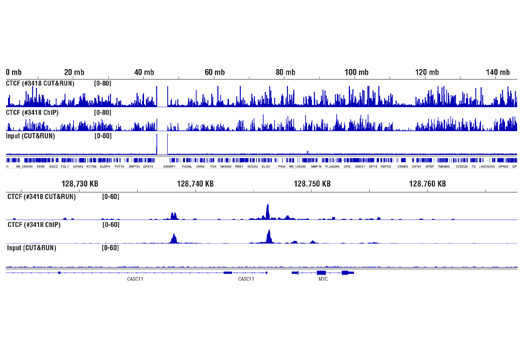
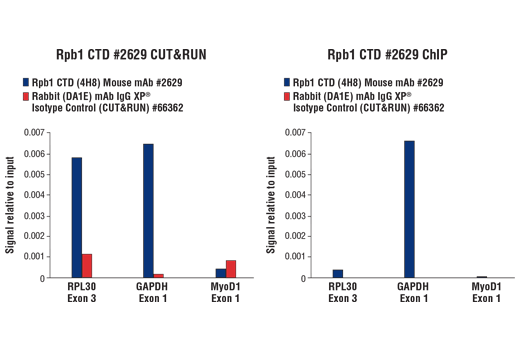
Like the chromatin immunoprecipitation (ChIP) assay, Cleavage Under Targets & Release Using Nuclease (CUT&RUN) is a powerful and versatile technique used for probing protein-DNA interactions within the natural chromatin context of the cell (1-4). This assay can be used to identify multiple proteins associated with a specific region of the genome, or the opposite, to identify the many regions of the genome associated with a particular protein. In addition, the CUT&RUN assay can be used to define the spatial and temporal relationship of a particular protein-DNA interaction. For example, the CUT&RUN assay can be used to determine the specific order of recruitment of various protein factors to a gene promoter or to “measure” the relative amount of a particular histone modification across an entire gene locus during gene activation. In addition to histone proteins, the CUT&RUN assay can also be used to analyze binding of transcription factors and cofactors, DNA replication factors, and DNA repair proteins (Figures 1-6).CUT&RUN provides a rapid, robust, and true low cell number assay for detection of protein-DNA interactions in the cell. Unlike the ChIP assay, CUT&RUN is free from formaldehyde cross-linking, chromatin fragmentation, and immunoprecipitation, making it a much faster and more efficient method for enriching protein-DNA interactions and identifying target genes. CUT&RUN can be performed in less than one day, from live cells to purified DNA, and has been shown to work with as few as 500-1000 cells per assay (1,2). Instead of fragmenting all of the cellular chromatin as done in ChIP, CUT&RUN utilizes an antibody-targeted digestion of chromatin, resulting in much lower background signal than seen in the ChIP assay. As a result, CUT&RUN requires only 1/10th of the sequencing depth that is required for ChIP-seq assays (1,2). Finally, the inclusion of simple spike-in control DNA allows for accurate quantification and normalization of target-protein binding that is not possible with the ChIP method. This provides for effective normalization of signal between samples and between experiments.
1.Skene, P.J. and Henikoff, S. (2017) Elife 6, pii: e21856. doi: 10.7554/eLife.21856.
2.Skene, P.J. et al. (2018) Nat Protoc 13, 1006-19.
3.Meers, M.P. et al. (2019) Elife 8, pii: e46314. doi: 10.7554/eLife.46314.
4.Meers, M.P. et al. (2019) Mol Cell 75, 562-575.e5.





 全部商品分类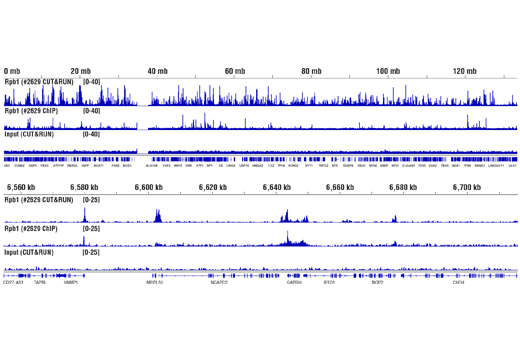


 用小程序,查商品更便捷



 收藏
收藏
 对比
对比 咨询
咨询