




 全部商品分类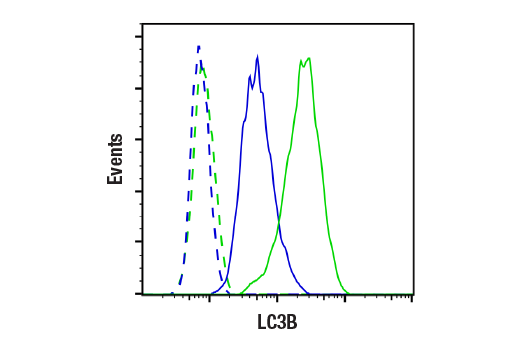
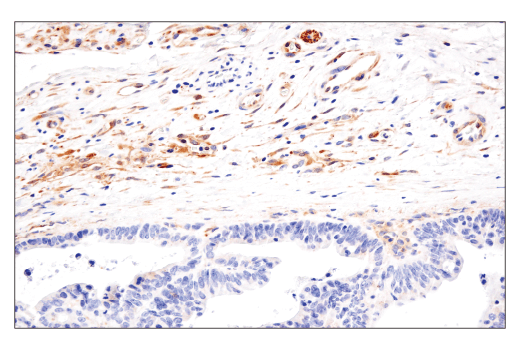
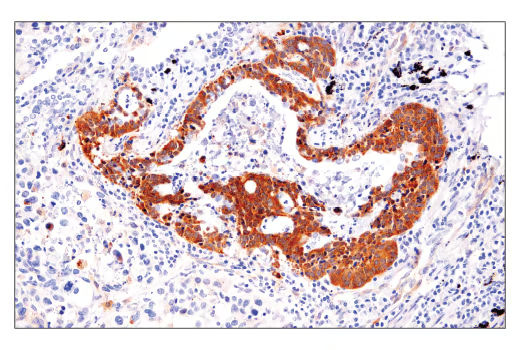
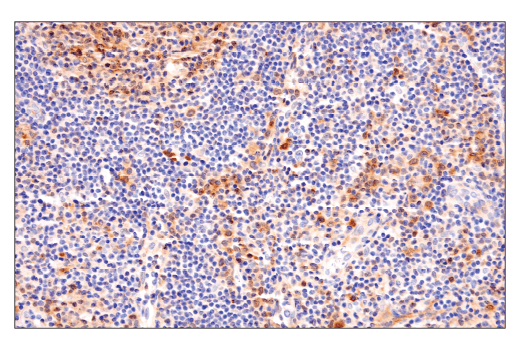
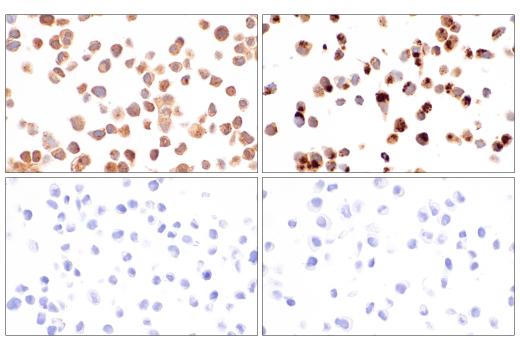


1/20


 用小程序,查商品更便捷





产品介绍
产品介绍
产品信息
荧光素标记
Unconjugated

抗原名称
LC3B
来源纯化
Monoclonal antibody is produced by immunizing animals with a synthetic peptide corresponding to residues near the amino terminus of human LC3B protein.
宿主
Mouse
商品描述
Product Usage Information
| Application | Dilution |
|---|---|
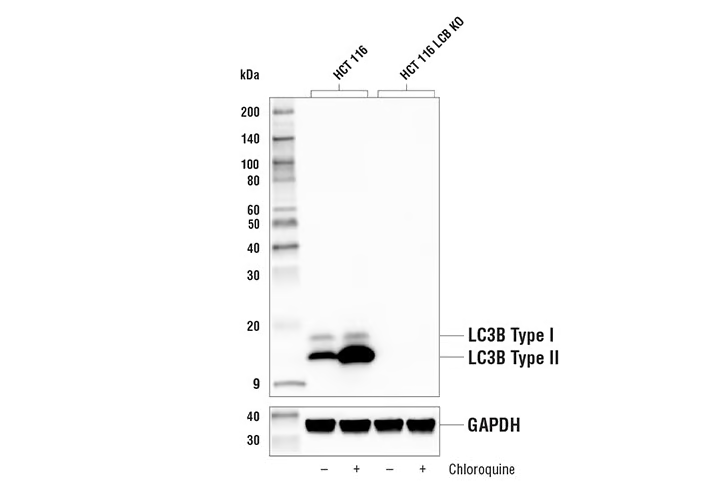
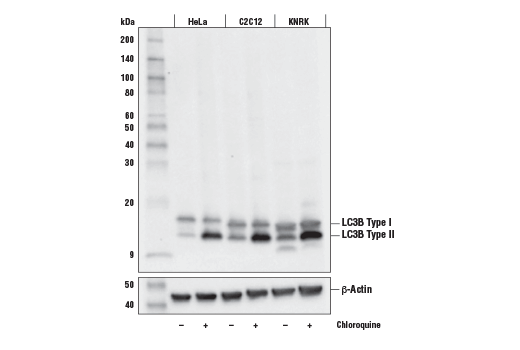
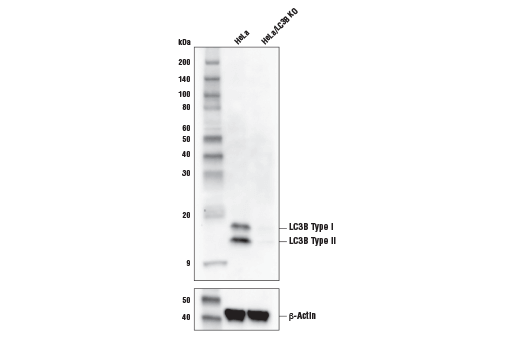
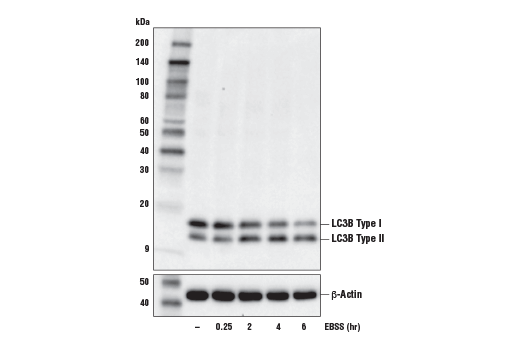
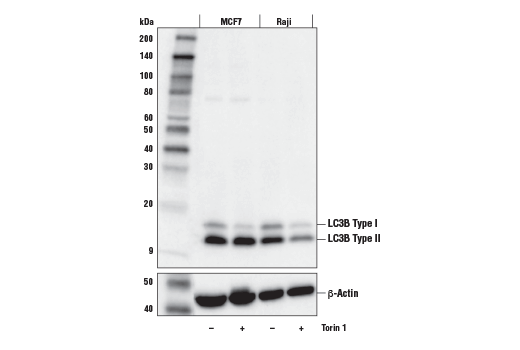
| Western Blotting | 1:1000 |
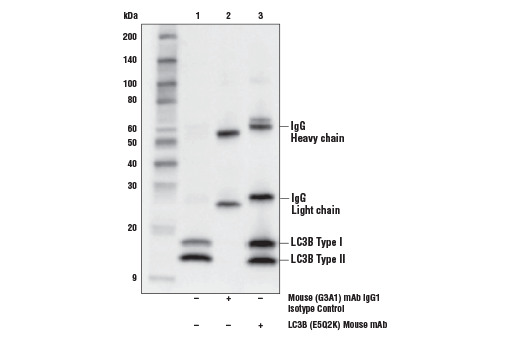
| Immunoprecipitation | 1:100 |
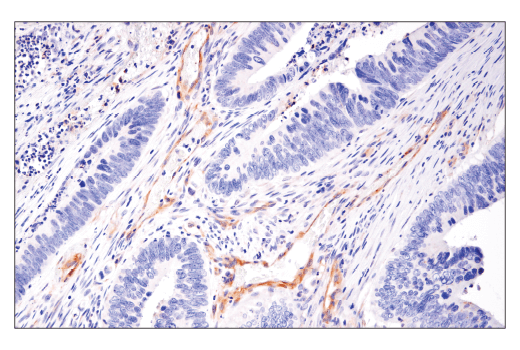
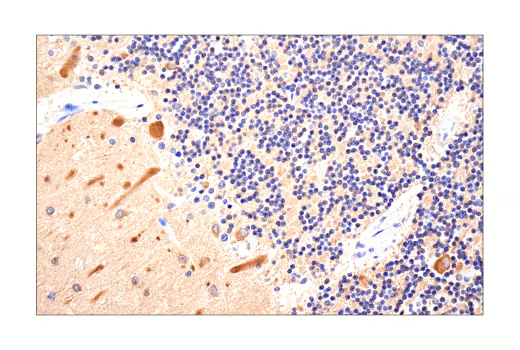
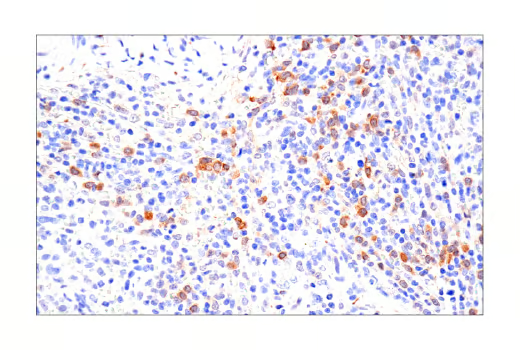
| Immunohistochemistry (Paraffin) | 1:50 - 1:200 |
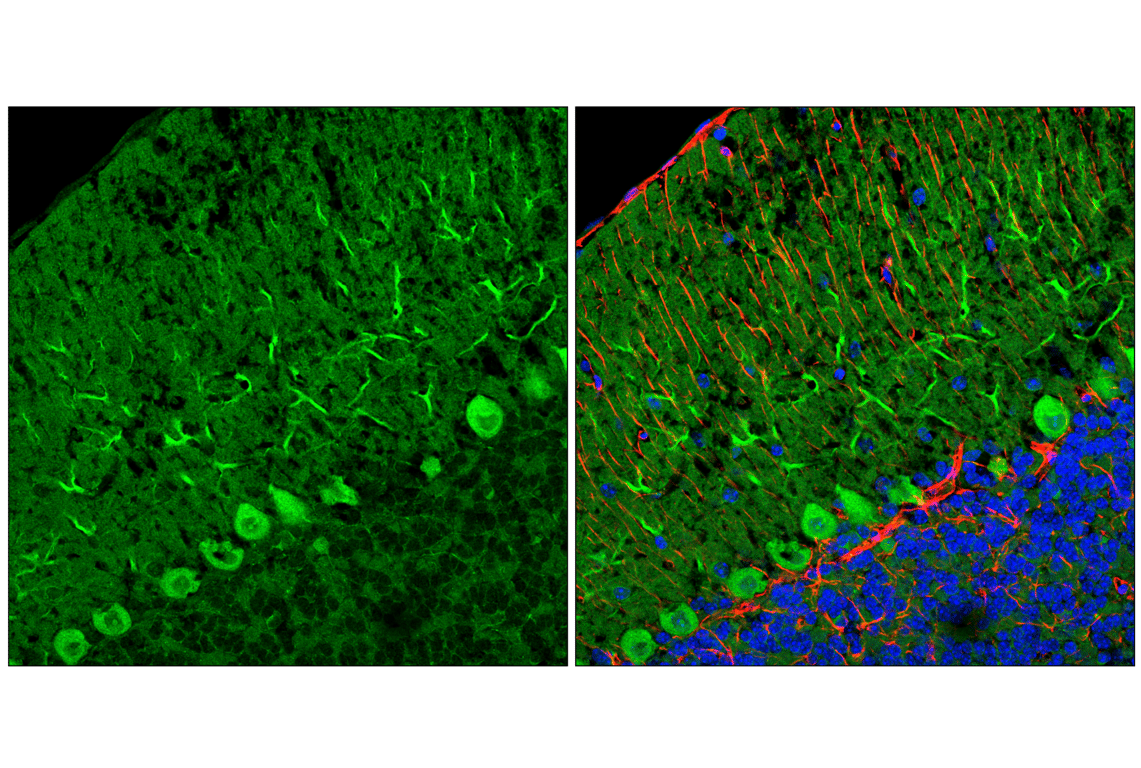
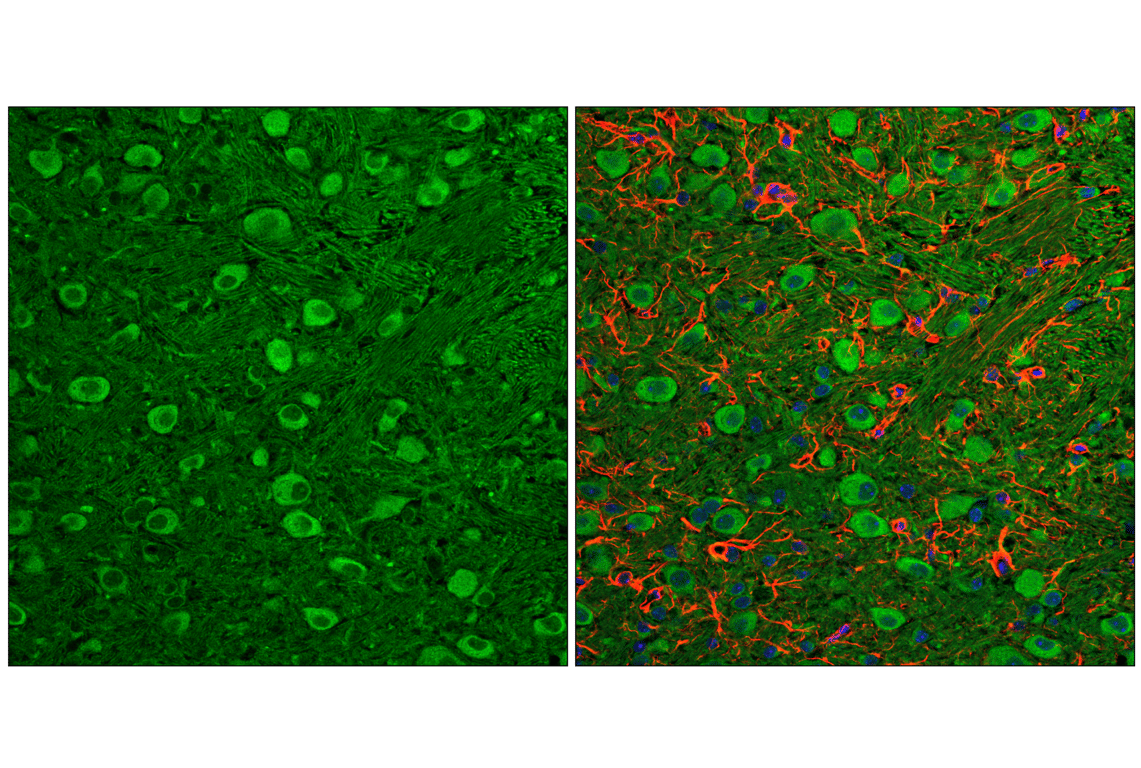
| Immunofluorescence (Frozen) | 1:50 - 1:200 |
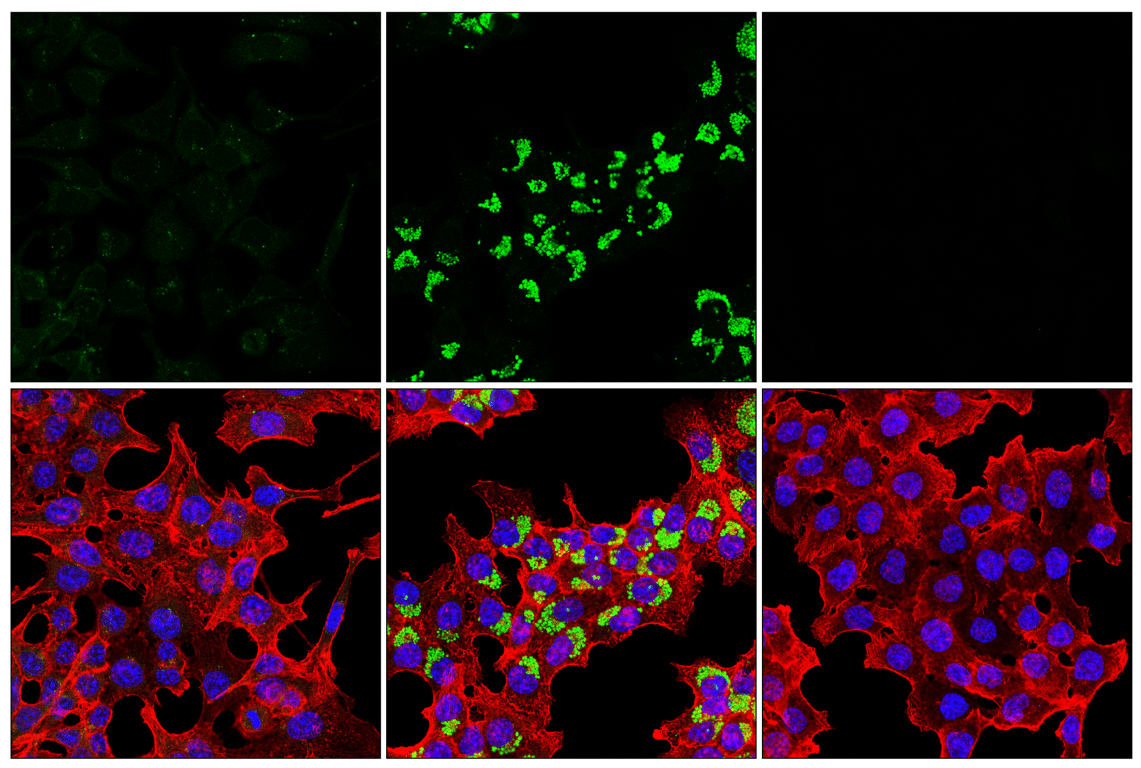
| Immunofluorescence (Immunocytochemistry) | 1:200 - 1:800 |
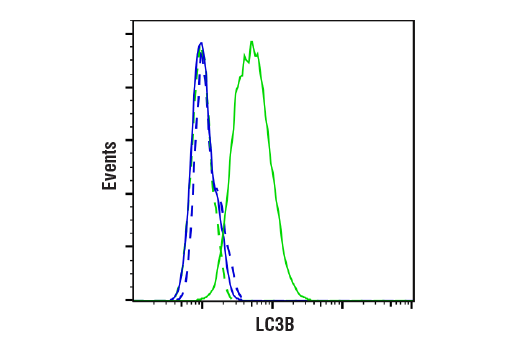
| Flow Cytometry (Fixed/Permeabilized) | 1:100 - 1:400 |
同种型
Mouse IgG2b
分子量
14, 16
研究领域
癌症,细胞生物学,纤维化,代谢,神经科学
应用
反应种属
Human,Mouse,Rat,
目标/特异性
Specificity/Sensitivity
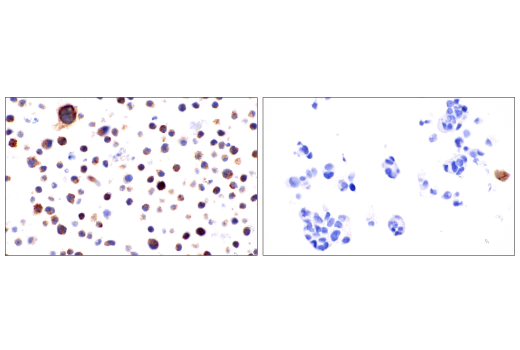
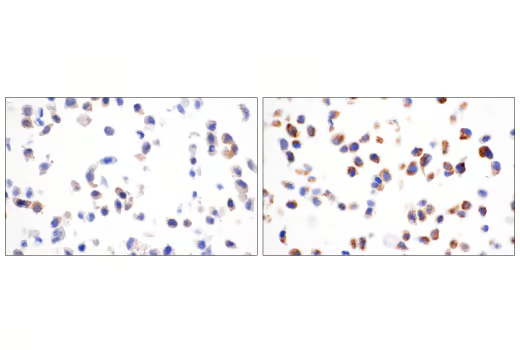
LC3B (E5Q2K) Mouse mAb recognizes endogenous levels of total LC3B protein. This antibody detects both type I and type II forms of LC3B. Cross reactivity was not detected with other family members.
Species Reactivity:
Human, Mouse, Rat
敏感性
Endogenous
背景
背景
Autophagy is a catabolic process for the autophagosomic-lysosomal degradation of bulk cytoplasmic contents (1,2). Autophagy is generally activated by conditions of nutrient deprivation, but it has also been associated with a number of physiological processes including development, differentiation, neurodegenerative diseases, infection, and cancer (3). Autophagy marker Light Chain 3 (LC3) was originally identified as a subunit of microtubule-associated proteins 1A and 1B (termed MAP1LC3) (4) and subsequently found to contain similarity to the yeast protein Apg8/Aut7/Cvt5 critical for autophagy (5). Three human LC3 isoforms (LC3A, LC3B, and LC3C) undergo posttranslational modifications during autophagy (6-9). Cleavage of LC3 at the carboxy terminus immediately following synthesis yields the cytosolic LC3-I form. During autophagy, LC3-I is converted to LC3-II through lipidation by a ubiquitin-like system involving Atg7 and Atg3 that allows for LC3 to become associated with autophagic vesicles (6-10). The presence of LC3 in autophagosomes and the conversion of LC3 to the lower migrating form, LC3-II, have been used as indicators of autophagy (11).
1.Reggiori, F. and Klionsky, D.J. (2002) Eukaryot. Cell 1, 11-21.
2.Codogno, P. and Meijer, A.J. (2005) Cell Death Differ. 12 Suppl 2, 1509-18.
3.Levine, B. and Yuan, J. (2005) J. Clin. Invest. 115, 2679-88.
4.Mann, S.S. and Hammarback, J.A. (1994) J. Biol. Chem. 269, 11492-97.
5.Lang, T. et al. (1998) EMBO J. 17, 3597-607.
6.Kabeya, Y. et al. (2000) EMBO J. 19, 5720-28.
7.He, H. et al. (2003) J. Biol. Chem. 278, 29278-87.
8.Tanida, I. et al. (2004) J. Biol. Chem. 279, 47704-10.
9.Wu, J. et al. (2006) Biochem. Biophys. Res. Commun. 339, 437-42.
10.Ichimura, Y. et al. (2000) Nature 408, 488-92.
11.Kabeya, Y. et al. (2004) J. Cell Sci. 117, 2805-12.
研究领域
癌症,细胞生物学,纤维化,代谢,神经科学
翻译后修饰
unmodified
制备和贮存
保存方式
Supplied in 10 mM sodium HEPES (pH 7.5), 150 mM NaCl, 100 µg/ml BSA, 50% glycerol and less than 0.02% sodium azide. Store at –20°C. Do not aliquot the antibody.
For a carrier free (BSA and azide free) version of this product see product #20371.
数据库链接
Entrez-Gene ID
81631
UniProt ID
Q9GZQ8
声明 :本官网所有报价均为常温或者蓝冰运输价格,如有产品需要干冰运输,需另外加收干冰运输费。