




 全部商品分类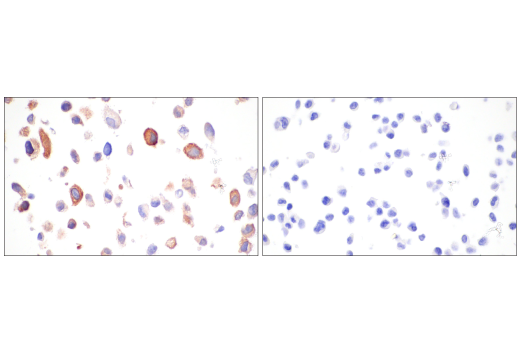
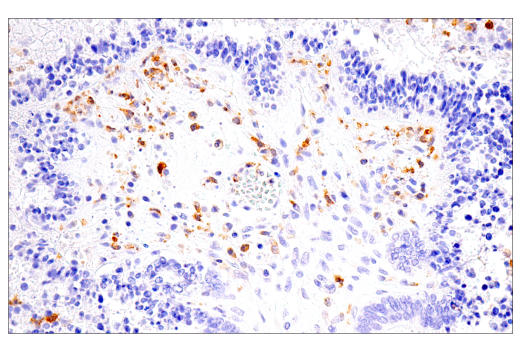
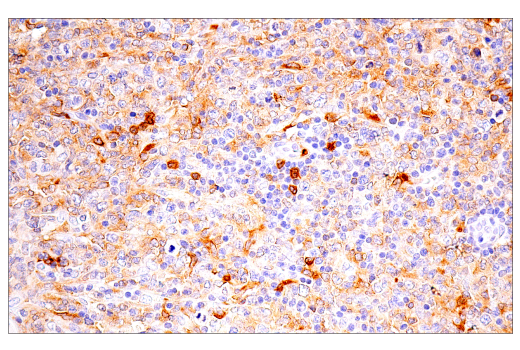
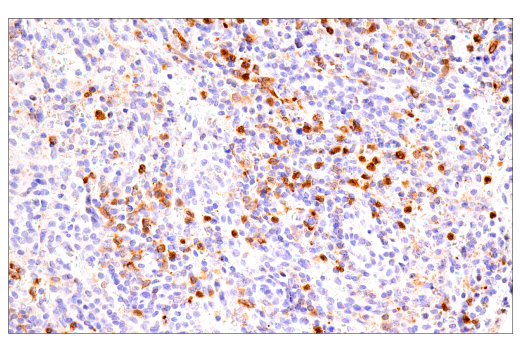
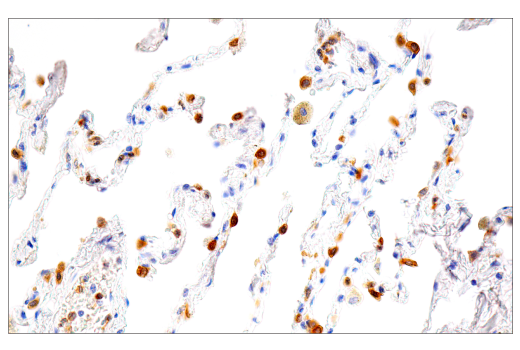


1/9


 用小程序,查商品更便捷





产品介绍
产品介绍
产品信息
荧光素标记
Unconjugated

来源纯化
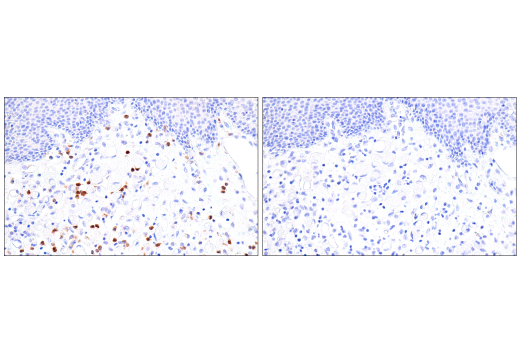
Monoclonal antibody is produced by immunizing animals with a synthetic peptide corresponding to residues surrounding Leu1840 of human LRRK2 protein.
宿主
Mouse
商品描述
Product Usage Information
| Application | Dilution |
|---|---|
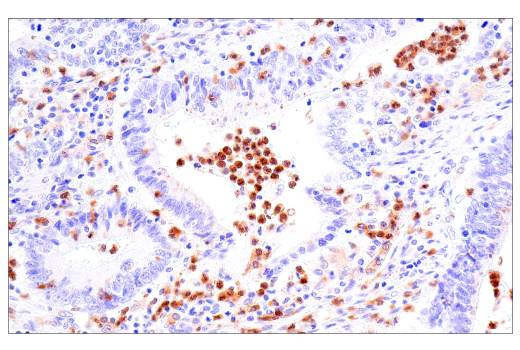
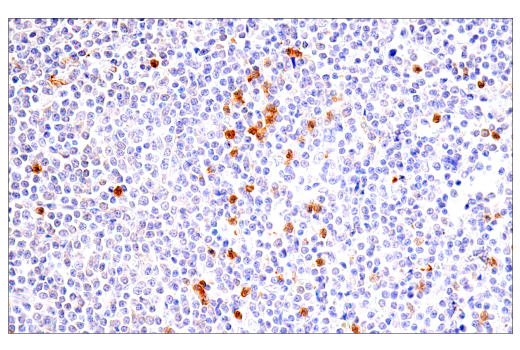
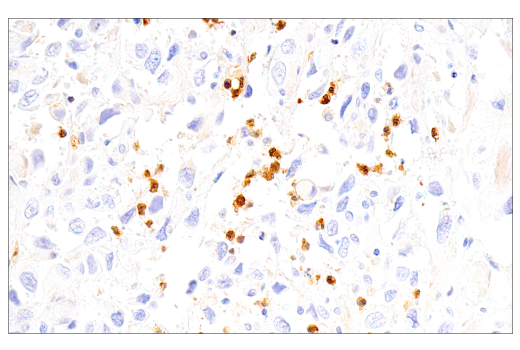
| Immunohistochemistry (Paraffin) | 1:100 - 1:400 |
同种型
Mouse IgG2b kappa
应用
目标/特异性
Specificity/Sensitivity
LRRK2 (E8Z7T) Mouse mAb recognizes endogenous levels of total LRRK2 protein.
Species Reactivity:
Human
敏感性
Endogenous
背景
背景
Parkinson’s disease (PD), the second most common neurodegenerative disease after Alzheimer’s, is a progressive movement disorder characterized by rigidity, tremors, and postural instability. The pathological hallmarks of PD are progressive loss of dopaminergic neurons in the substantia nigra of the ventral midbrain and the presence of intracellular Lewy bodies (protein aggregates of α-synuclein, ubiquitin, and other components) in surviving neurons of the brain stem (1). Research studies have shown various genes and loci are genetically linked to PD including α-synuclein/PARK1 and 4, parkin/PARK2, UCH-L1/PARK5, PINK1/PARK6, DJ-1/PARK7, LRRK2/PARK8, synphilin-1, and NR4A2 (2).Leucine-rich repeat kinase 2 (LRRK2) contains amino-terminal leucine-rich repeats (LRR), a Ras-like small GTP binding protein-like (ROC) domain, an MLK protein kinase domain, and a carboxy-terminal WD40 repeat domain. Research studies have linked at least 20 LRRK2 mutations to PD, with the G2019S mutation being the most prevalent (3). The G2019S mutation causes increased LRRK2 kinase activity, which induces a progressive reduction in neurite length that leads to progressive neurite loss and decreased neuronal survival (4). Researchers are currently testing the MLK inhibitor CEP-1347 in PD clinical trials, indicating the potential value of LRRK2 as a therapeutic target for treatment of PD (5).
1.Fahn, S. (2003) Ann. NY Acad. Sci. 991, 1-14.
2.Moore, D.J. et al. (2005) Annu. Rev. Neurosci. 28, 57-87.
3.Mata, I.F. et al. (2006) Trends Neurosci. 29, 286-293.
4.MacLeod, D. et al. (2006) Neuron 52, 587-593.
5.Parkinson Study Group. (2004) Neurology 62, 330-332.
研究领域
神经科学
制备和贮存
保存方式
Supplied in 10 mM sodium HEPES (pH 7.5), 150 mM NaCl, 100 µg/mL BSA, 50% glycerol, and less than 0.02% sodium azide. Store at –20°C. Do not aliquot the antibody.
For a carrier free (BSA and azide free) version of this product see product #39029.
数据库链接
Entrez-Gene ID
120892
UniProt ID
Q5S007
声明 :本官网所有报价均为常温或者蓝冰运输价格,如有产品需要干冰运输,需另外加收干冰运输费。