



 全部商品分类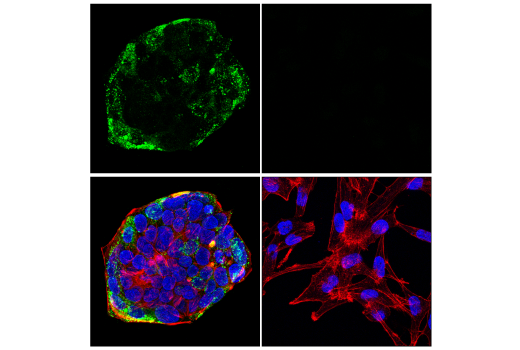


1/8


 用小程序,查商品更便捷





产品介绍
产品介绍
产品信息
荧光素标记
Unconjugated

来源纯化
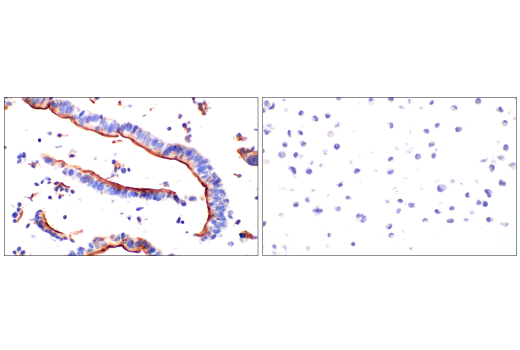
Monoclonal antibody is produced by immunizing animals with recombinant protein specific to the amino terminus of human MUC13 protein.
宿主
Rabbit
商品描述
Product Usage Information
| Application | Dilution |
|---|---|
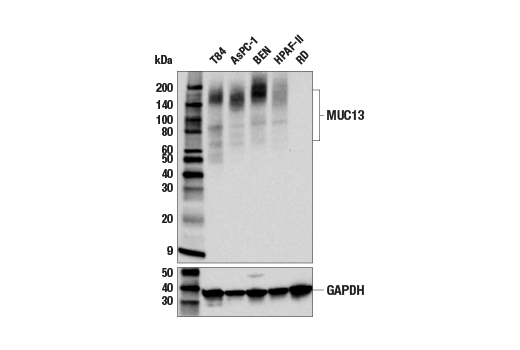
| Western Blotting | 1:1000 |
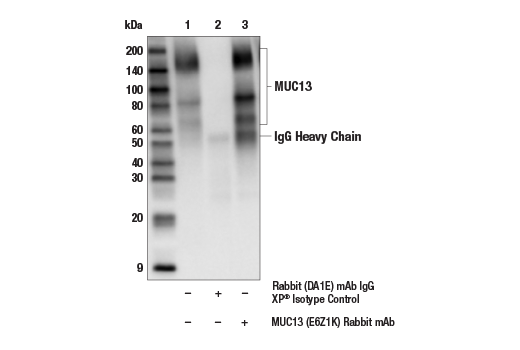
| Immunoprecipitation | 1:100 |
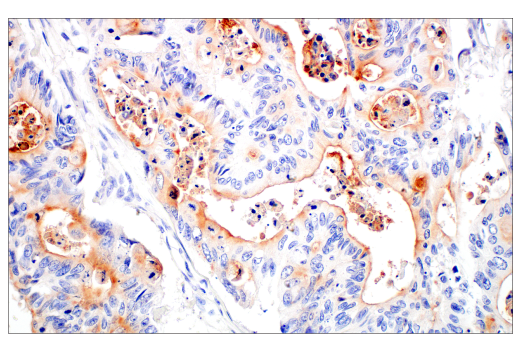
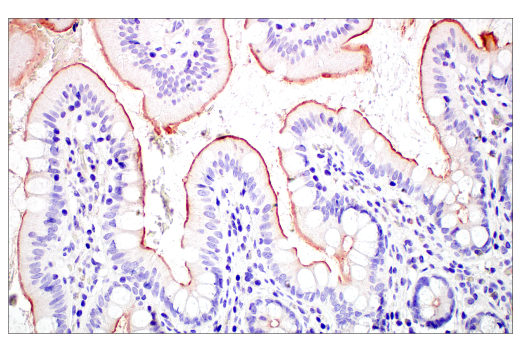
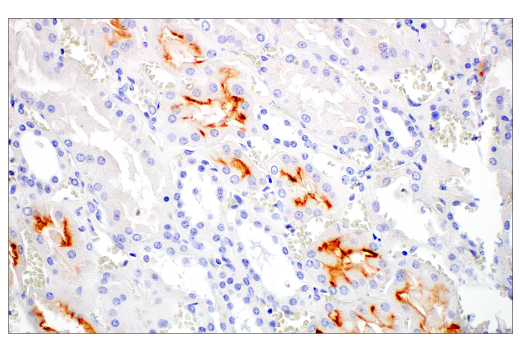
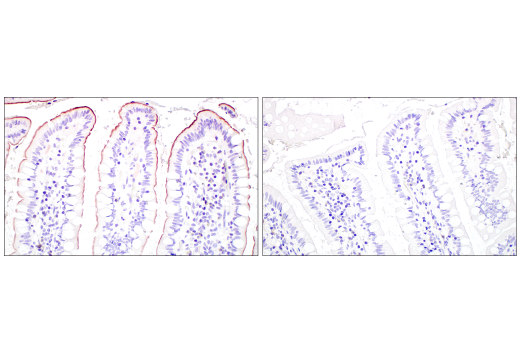
| Immunohistochemistry (Paraffin) | 1:50 |
| Immunofluorescence (Immunocytochemistry) | 1:800 - 1:3200 |
同种型
Rabbit IgG
分子量
70-90,120-175
应用
目标/特异性
Specificity/Sensitivity
MUC13 (E6Z1K) Rabbit mAb recognizes endogenous levels of total MUC13 protein.
Species Reactivity:
Human
敏感性
Endogenous
背景
背景
Mucin proteins are glycoproteins known for providing protection and lubrication to the luminal epithelial tissues under normal physiologic conditions (1,2). There are three types of mucins based on their structure and location: transmembrane, secreted, and soluble. Mucins can function as oncogenes and exert the effect of tumor-promoting and/or tumor-suppressing factors (3). MUC13 (Mucin13) is a transmembrane mucin. The protein is expressed in the epithelium layer of large intestine, trachea, kidney, small intestine, stomach, and hematopoietic cells (4). There it regulates epithelial inflammation in response to inflammatory and infectious stimuli (5). MUC13 is aberrantly overexpressed in various cancer types including gastric (6), pancreatic (7), hepatic (8), colonic (9), renal (10), etc. The protein promotes tumorigenesis, metastasis, and induces resistance to chemotherapy via activating multiple signaling pathways, such as β-catenin signaling, Her2/EGFR signaling, and NF-kB signaling (8,9,11,12). The apparent molecular weight of MUC13 is varied from 70 to 90 kDa and 120 to 175 kDa in different cell lines, due to the different protein glycosylation status (13).
1.van Putten, J.P.M. and Strijbis, K. (2017) J Innate Immun 9, 281-299.
2.Kasprzak, A. and Adamek, A. (2019) Int J Mol Sci 20, 1288. doi: 10.3390/ijms20061288.
3.Reynolds, I.S. et al. (2019) Cancer Metastasis Rev 38, 237-257.
4.Williams, S.J. et al. (2001) J Biol Chem 276, 18327-36.
5.Sheng, Y.H. et al. (2013) Mucosal Immunol 6, 557-68.
6.Shimamura, T. et al. (2005) Cancer Sci 96, 265-73.
7.Khan, S. et al. (2017) Oncogene 36, 491-500.
8.Dai, Y. et al. (2018) Am J Pathol 188, 378-391.
9.Sheng, Y.H. et al. (2019) Oncogene 38, 7294-7310.
10.Sheng, Y. et al. (2017) Int J Cancer 140, 2351-2363.
11.Tiemin, P. et al. (2020) J Hepatol 72, 761-773.
12.Sheng, Y.H. et al. (2017) Oncogene 36, 700-713.
13.Maher, D.M. et al. (2011) Mol Cancer Res 9, 531-537.
研究领域
癌症,细胞生物学,纤维化,神经科学,
翻译后修饰
unmodified
制备和贮存
保存方式
Supplied in 10 mM sodium HEPES (pH 7.5), 150 mM NaCl, 100 µg/mL BSA, 50% glycerol, and less than 0.02% sodium azide. Store at –20°C. Do not aliquot the antibody.
For a carrier free (BSA and azide free) version of this product see product #17339.
数据库链接
Entrez-Gene ID
56667
UniProt ID
Q9H3R2
声明 :本官网所有报价均为常温或者蓝冰运输价格,如有产品需要干冰运输,需另外加收干冰运输费。