


 全部商品分类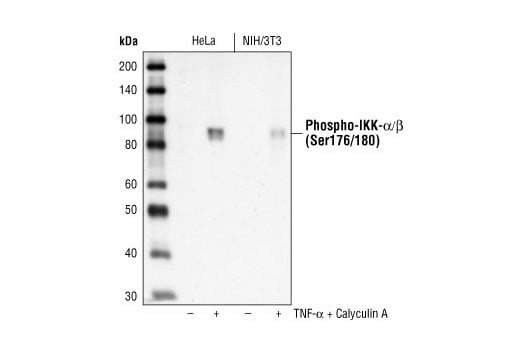
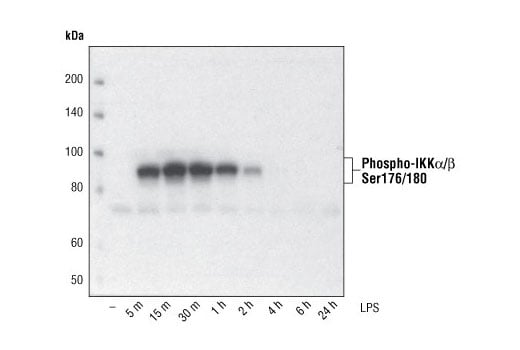
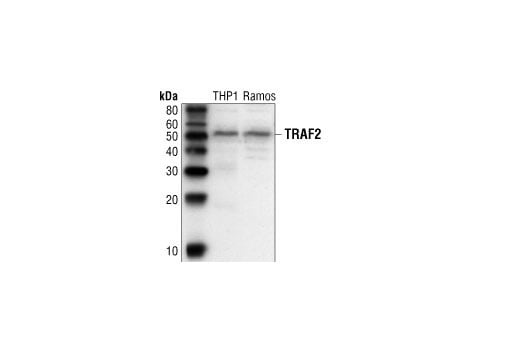
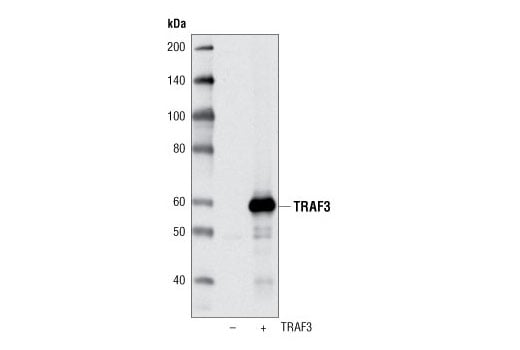
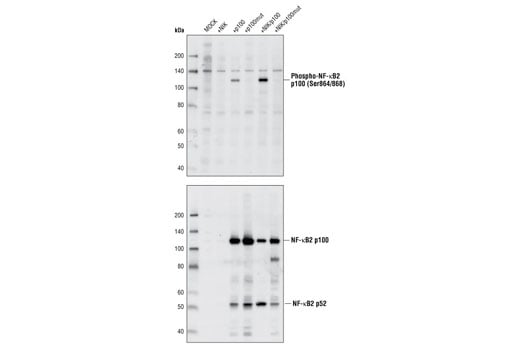




1/26
NF-kappa-B Non-Canonical Pathway Antibody Sampler Kit


品牌: CST
 用小程序,查商品更便捷



 收藏
收藏
 对比
对比 咨询
咨询
产品介绍
产品介绍
产品信息
荧光素标记
Unconjugated

抗原名称
NF-kappaB Non-Canonical Pathway
简单描述
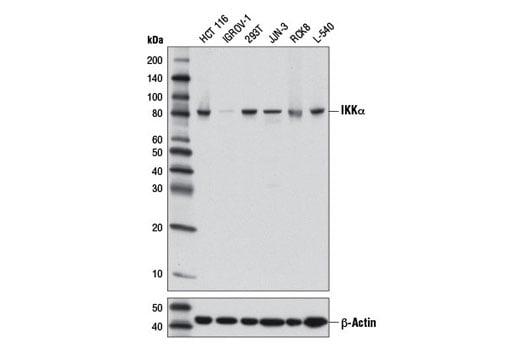
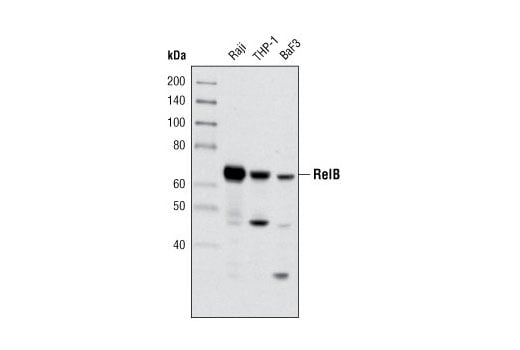
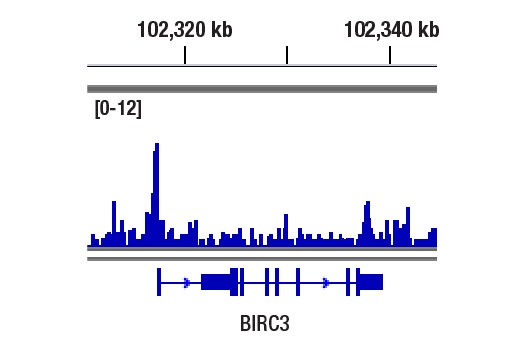
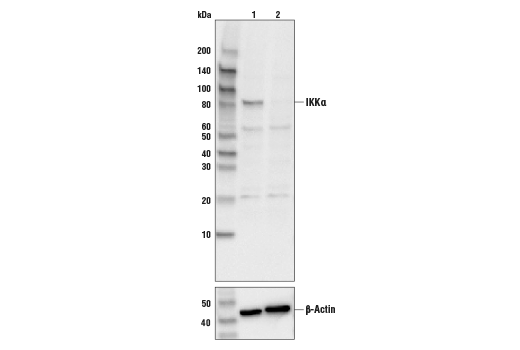
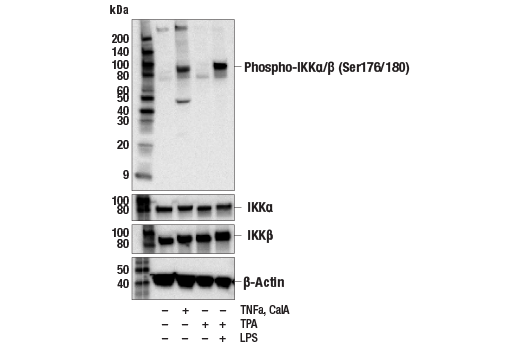
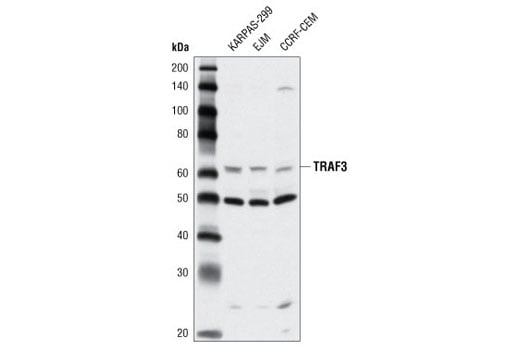
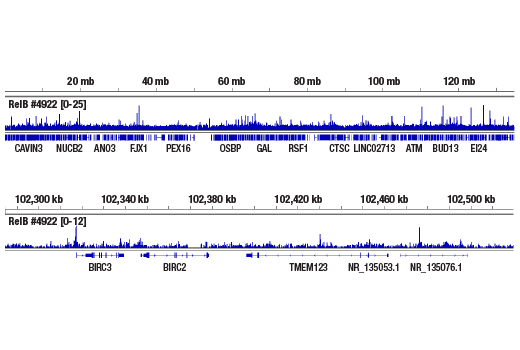
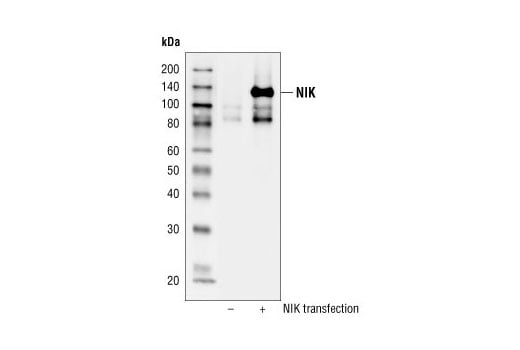
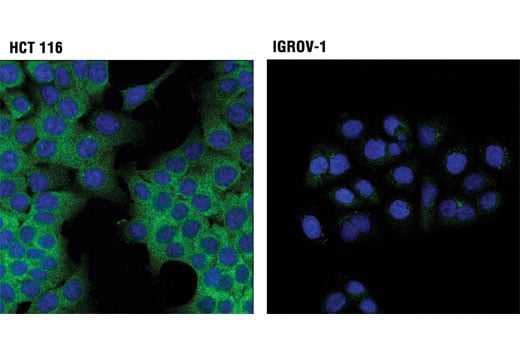
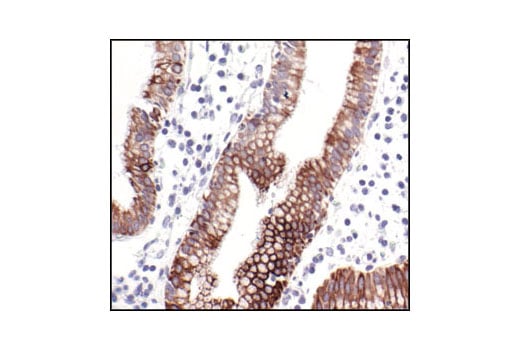
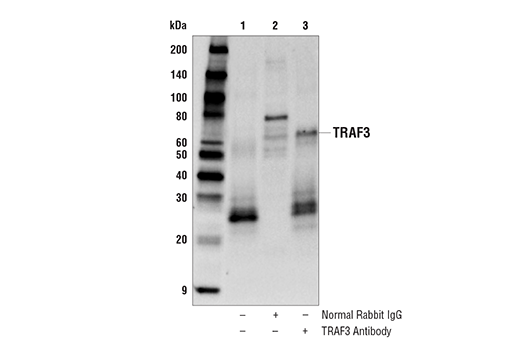
This kit contains reagents to examine the activation state and total protein levels of key components in the noncanonical NF-κB pathway: TRAF2, TRAF3, NIK, IKKα, p100, and RelB.
背景
背景
Transcription factors of the nuclear factor κB (NF-κB)/Rel family play a pivotal role in inflammatory and immune responses (1,2). There are five family members in mammals: RelA, RelB, c-Rel, NF-κB1 (p105/p50) and NF-κB2 (p100/p52). Both p105 and p100 are proteolytically processed by the proteasome to produce p50 and p52, respectively. The p50 and p52 products form dimeric complexes with Rel proteins. While p50 associates with many of the NF-κB family members, p52 tends to form dimers primarily with RelB. A plethora of stimuli such TNFα and LPS induce the canonical NF-κB pathway, characterized by the activation of the classical IκB Kinase (IKK) complex (containing IKKα, IKKβ, IKKγ, and ELKS), which then phosphorylates inhibitory IκB molecules, targeting them for rapid degradation through a ubiquitin-proteasome pathway (3).The noncanonical pathway, triggered by BAFF, CD40L, and certain other stimuli, is based on the inducible phosphorylation and proteasome-mediated partial degradation of NF-κB2 p100 to p52, a process regulated by the NF-κB Inducing Kinase (NIK) and IKKα, but not IKKβ or IKKγ (4-6). NIK phosphorylates IKKα at Ser176/180 (6) and p100 at Ser866/870, then recruits IKKα to p100 where IKKα phosphorylates additional residues in the N- and C-terminus (8), leading to the ubiquitination and processing of p100 (9). The TNF Receptor Associated Factor molecules TRAF2 and TRAF3 have been shown to be negative regulators of the noncanonical pathway (10, 11), and their differential binding to receptors may also play a role in determining whether transduced signals activate the canonical pathway, noncanonical pathway, or both (12). TRAF3 promotes the rapid turnover of NIK in resting cells, and its activation-induced degradation is a key regulatory point in the pathway (13). This pathway is required for B cell maturation and activation, proper architecture of peripheral lymphoid tissue, and safeguards against autoimmunity (14).
1.Baeuerle, P.A. and Henkel, T. (1994) Annu Rev Immunol 12, 141-79.
2.Baeuerle, P.A. and Baltimore, D. (1996) Cell 87, 13-20.
3.Ghosh, S. and Karin, M. (2002) Cell 109 Suppl, S81-96.
4.Xiao, G. et al. (2001) Mol Cell 7, 401-9.
5.Senftleben, U. et al. (2001) Science 293, 1495-9.
6.Xiao, G. et al. (2001) EMBO J 20, 6805-15.
7.Ling, L. et al. (1998) Proc Natl Acad Sci USA 95, 3792-7.
8.Xiao, G. et al. (2004) J Biol Chem 279, 30099-105.
9.Liang, C. et al. (2006) Cell Signal 18, 1309-17.
10.Xia, Z.P. and Chen, Z.J. (2005) Sci STKE 2005, pe7.
11.Liao, G. et al. (2004) J Biol Chem 279, 26243-50.
12.Morrison, M.D. et al. (2005) J Biol Chem 280, 10018-24.
13.Qing, G. et al. (2005) J Biol Chem 280, 40578-82.
14.Xiao, G. et al. (2006) Cytokine Growth Factor Rev 17, 281-93.
翻译后修饰
phosphate
数据库链接
Entrez-Gene ID
9020,5971,7187,4791,7186,1147
UniProt ID
Q99558,Q01201,Q13114,Q00653,Q12933,O15111
声明 :本官网所有报价均为常温或者蓝冰运输价格,如有产品需要干冰运输,需另外加收干冰运输费。