




 全部商品分类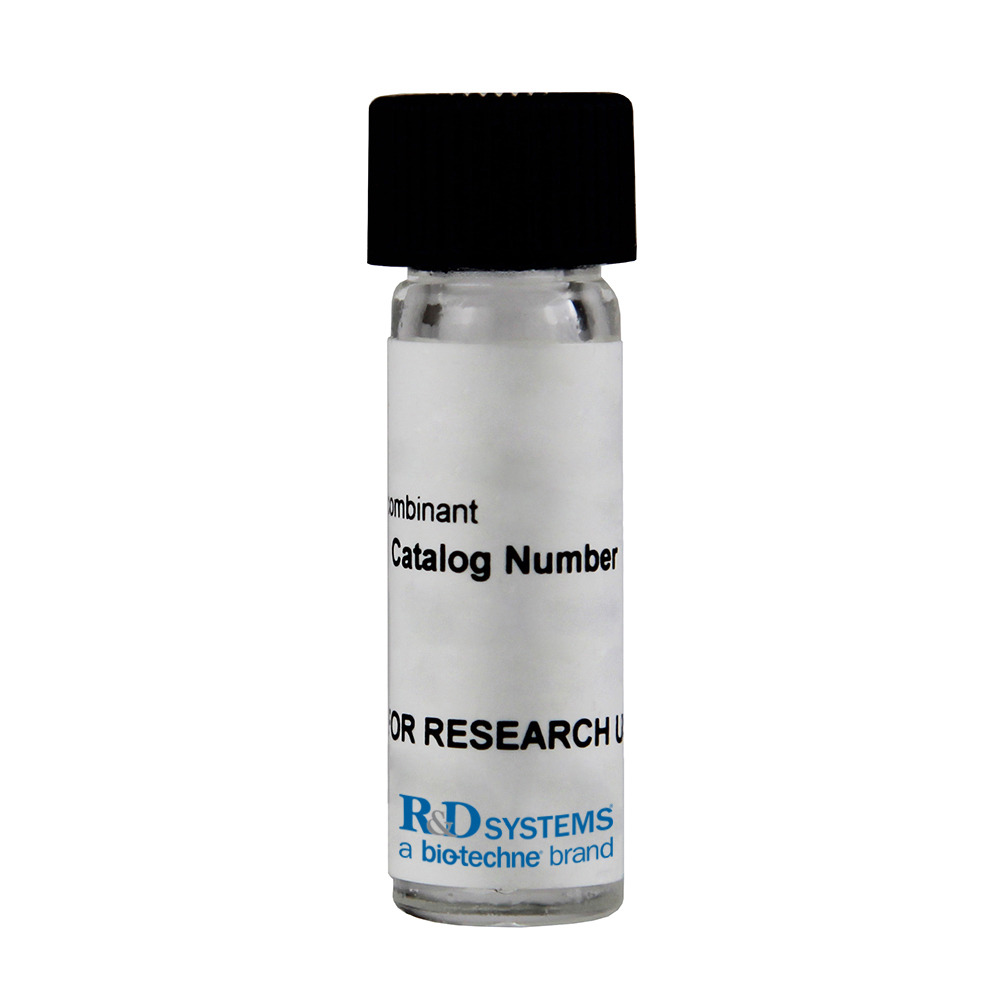


Recombinant Mouse NT-4 Protein, CF (5 ug)


 用小程序,查商品更便捷



 收藏
收藏
 对比
对比 咨询
咨询Recombinant Mouse NT-4 Protein Summary
- R&D Systems NS0-derived Recombinant Mouse NT-4 Protein (3236-N4)
- Quality control testing to verify active proteins with lot specific assays by in-house scientists
- All R&D Systems proteins are covered with a 100% guarantee
Product Specifications
Gly80-Ala209
Analysis
Product Datasheets
3236-N4 (with carrier)
3236-N4/CF (carrier free)
Carrier Free
CF stands for Carrier Free (CF). We typically add Bovine Serum Albumin (BSA) as a carrier protein to our recombinant proteins. Adding a carrier protein enhances protein stability, increases shelf-life, and allows the recombinant protein to be stored at a more dilute concentration. The carrier free version does not contain BSA.
In general, we advise purchasing the recombinant protein with BSA for use in cell or tissue culture, or as an ELISA standard. In contrast, the carrier free protein is recommended for applications, in which the presence of BSA could interfere.
3236-N4
| Formulation | Lyophilized from a 0.2 μm filtered solution in PBS with BSA as a carrier protein. |
| Reconstitution | Reconstitute at 100 μg/mL in sterile PBS containing at least 0.1% human or bovine serum albumin. |
| Shipping | The product is shipped at ambient temperature. Upon receipt, store it immediately at the temperature recommended below. |
| Stability & Storage: | Use a manual defrost freezer and avoid repeated freeze-thaw cycles.
|
3236-N4/CF
| Formulation | Lyophilized from a 0.2 μm filtered solution in PBS. |
| Reconstitution | Reconstitute at 100 µg/mL in sterile PBS. |
| Shipping | The product is shipped at ambient temperature. Upon receipt, store it immediately at the temperature recommended below. |
| Stability & Storage: | Use a manual defrost freezer and avoid repeated freeze-thaw cycles.
|
Reconstitution Calculator
Background: NT-4
Neurotrophin-4 (NT-4), also known as NT-5, is a member of the NGF family of neuronal and epithelial growth factors. Neurotrophins have six conserved cysteine residues that are involved in the formation of three disulfide bonds (1 - 3). The mouse NT-4 cDNA encodes a 209 amino acid (aa) precursor that includes a 21 aa signal sequence, a 58 aa propeptide, and a 130 aa mature protein (4, 5). Mouse NT-4 is synthesized as a 28 kDa prepropeptide that is proteolytically processed to generate the mature protein. Mature mouse NT-4 shares 35 - 40% aa sequence identity with mouse beta-NGF, BDNF, and NT-3. It shares 91% and 99% aa sequence identity with human and rat NT-4/5, respectively. The mature protein is secreted as a homodimer and can also form heterodimers with BDNF or NT-3 (6). NT-4 binds and induces receptor dimerization and activation of TrkB (4, 7). NT-4 promotes the development and survival of selected peripheral and CNS neurons (8 - 10). BDNF, which also activates TrkB, overlaps with many but not all NT-4 functions, a distinction that is likely due to differences in expression patterns (8 - 10). NT-4 induced TrkB signaling augments NMDA receptor activity and increases neuronal sensitivity to excitotoxic cell death (11). It also promotes the proliferation of keratinocytes and accelerates hair follicle regression during the follicular cycle (12, 13). NT-4 is secreted by activated T cells and granulocytes at sites of inflammation where it contributes to tissue regeneration (14 - 16).
- Lessmann, V. et al. (2003) Prog. Neurobiol. 69:341.
- Tabakman, R. et al. (2004) Prog. Brain Res. 146:387.
- Botchkarev, V.A. et al. (2004) Prog. Brain Res. 146:493.
- Ip, N.Y. et al. (1992) Proc. Natl. Acad. Sci. 89:3060.
- Berkemeier, L.R. et al. (1991) Neuron 7:857.
- Radziejewski, C. and R.C. Robinson (1993) Biochemistry 32:13350.
- Vesa, J. et al. (2000) J. Biol. Chem. 275:24414.
- Davies, A.M. et al. (1993) J. Neurosci. 13:4961.
- Stucky, C.L. et al. (1998) J. Neurosci. 18:7040.
- Fan, G. et al. (2000) Nat. Neurosci. 3:350.
- Choi, S.Y. et al. (2004) J. Neurochem. 88:708.
- Botchkarev, V.A. et al. (1999) Lab. Invest. 79:557.
- Botchkarev, V.A. et al. (1999) FASEB J. 13:395.
- Laurenzi, M.A. et al. (1998) J. Leukoc. Biol. 64:228.
- Moalem, G. et al. (2000) J. Autoimmun. 15:331.
- Nassenstein, C. et al. (2003) J. Exp. Med. 198:455.
Background: NT-4
Neurotrophin-4 (NT-4), also known as NT-5, is a member of the NGF family of neuronal and epithelial growth factors. Neurotrophins have six conserved cysteine residues that are involved in the formation of three disulfide bonds (1 - 3). The mouse NT-4 cDNA encodes a 209 amino acid (aa) precursor that includes a 21 aa signal sequence, a 58 aa propeptide, and a 130 aa mature protein (4, 5). Mouse NT-4 is synthesized as a 28 kDa prepropeptide that is proteolytically processed to generate the mature protein. Mature mouse NT-4 shares 35 - 40% aa sequence identity with mouse beta-NGF, BDNF, and NT-3. It shares 91% and 99% aa sequence identity with human and rat NT-4/5, respectively. The mature protein is secreted as a homodimer and can also form heterodimers with BDNF or NT-3 (6). NT-4 binds and induces receptor dimerization and activation of TrkB (4, 7). NT-4 promotes the development and survival of selected peripheral and CNS neurons (8 - 10). BDNF, which also activates TrkB, overlaps with many but not all NT-4 functions, a distinction that is likely due to differences in expression patterns (8 - 10). NT-4 induced TrkB signaling augments NMDA receptor activity and increases neuronal sensitivity to excitotoxic cell death (11). It also promotes the proliferation of keratinocytes and accelerates hair follicle regression during the follicular cycle (12, 13). NT-4 is secreted by activated T cells and granulocytes at sites of inflammation where it contributes to tissue regeneration (14 - 16).
- Lessmann, V. et al. (2003) Prog. Neurobiol. 69:341.
- Tabakman, R. et al. (2004) Prog. Brain Res. 146:387.
- Botchkarev, V.A. et al. (2004) Prog. Brain Res. 146:493.
- Ip, N.Y. et al. (1992) Proc. Natl. Acad. Sci. 89:3060.
- Berkemeier, L.R. et al. (1991) Neuron 7:857.
- Radziejewski, C. and R.C. Robinson (1993) Biochemistry 32:13350.
- Vesa, J. et al. (2000) J. Biol. Chem. 275:24414.
- Davies, A.M. et al. (1993) J. Neurosci. 13:4961.
- Stucky, C.L. et al. (1998) J. Neurosci. 18:7040.
- Fan, G. et al. (2000) Nat. Neurosci. 3:350.
- Choi, S.Y. et al. (2004) J. Neurochem. 88:708.
- Botchkarev, V.A. et al. (1999) Lab. Invest. 79:557.
- Botchkarev, V.A. et al. (1999) FASEB J. 13:395.
- Laurenzi, M.A. et al. (1998) J. Leukoc. Biol. 64:228.
- Moalem, G. et al. (2000) J. Autoimmun. 15:331.
- Nassenstein, C. et al. (2003) J. Exp. Med. 198:455.
