




 全部商品分类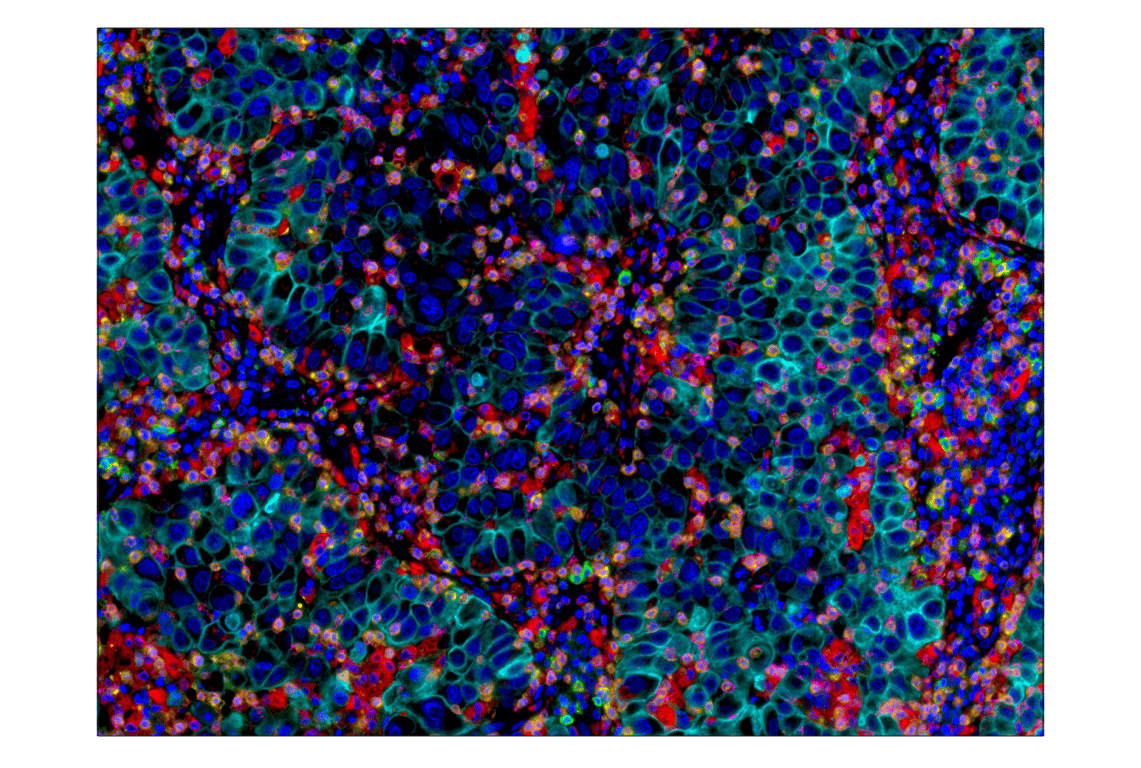


1/5


 用小程序,查商品更便捷





产品介绍
产品介绍
产品信息
荧光素标记
Unconjugated

抗原名称
PD-1
来源纯化
Monoclonal antibody is produced by immunizing animals with recombinant protein specific to the amino terminus of human PD-1 protein.
宿主
Mouse
商品描述
Product Usage Information
| Application | Dilution |
|---|---|
| IHC Leica Bond | 1:100 |
| Immunohistochemistry (Paraffin) | 1:200 |
同种型
Mouse IgG2a
研究领域
癌症,免疫学和肿瘤学,
应用
反应种属
Human
目标/特异性
Specificity/Sensitivity
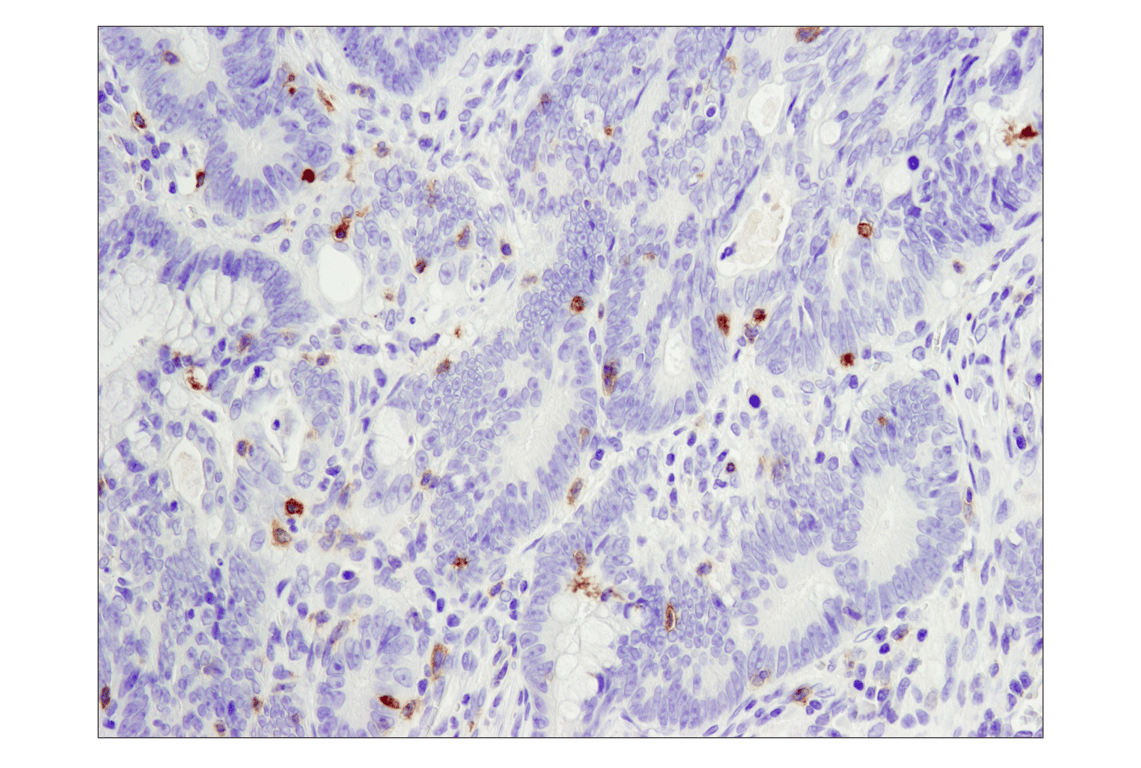
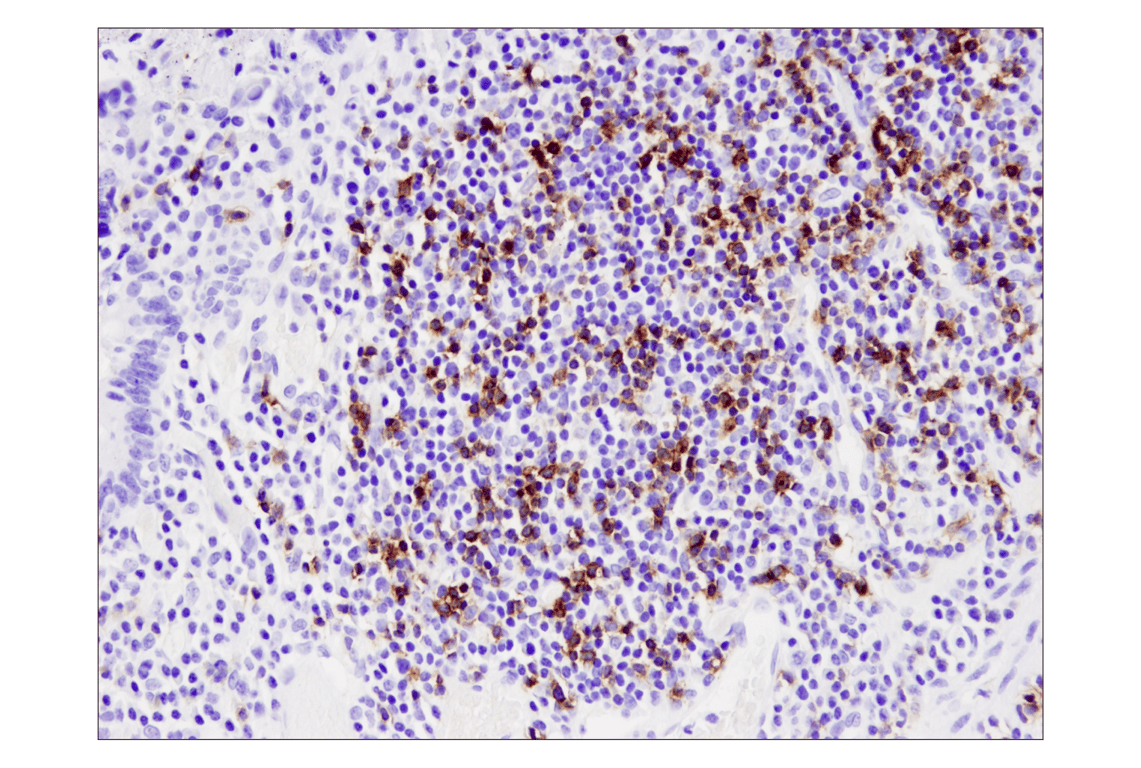
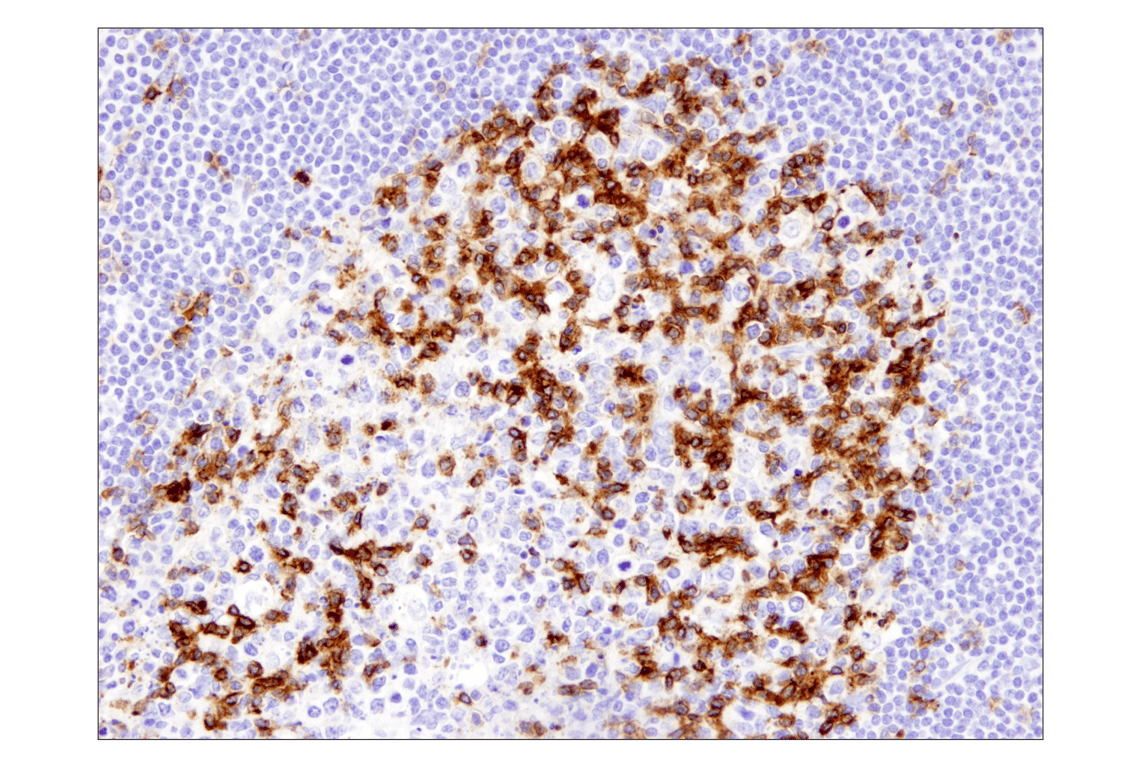
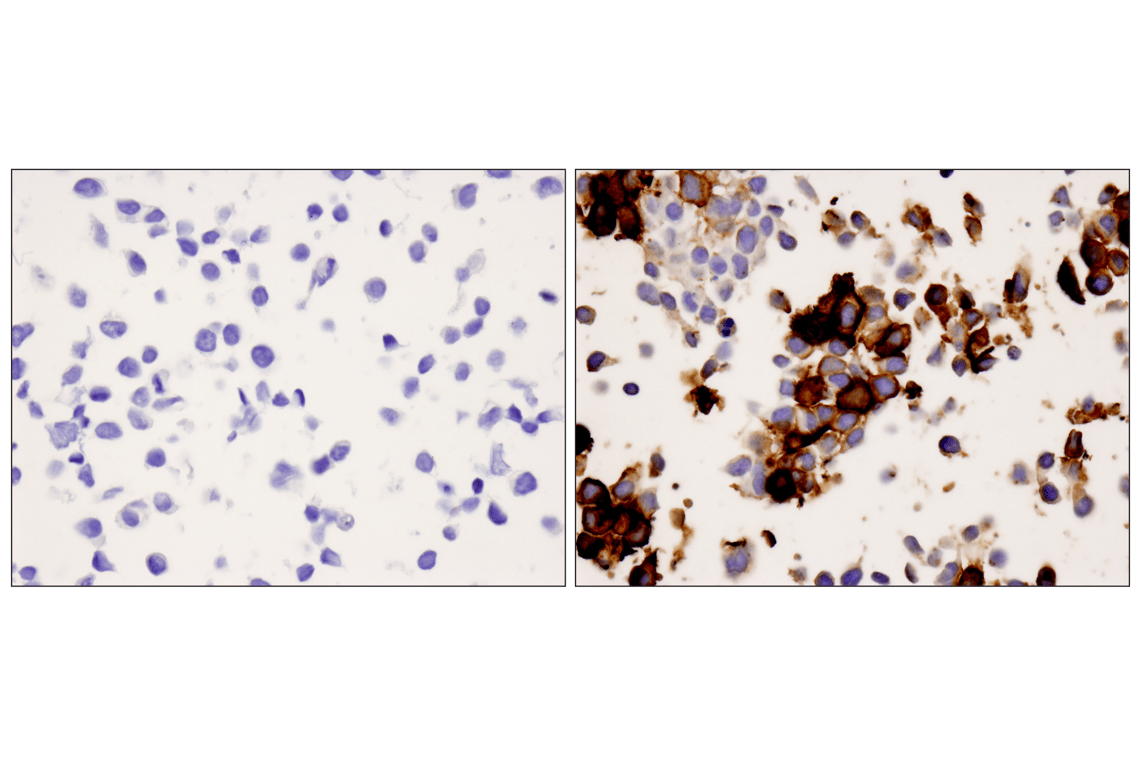
PD-1 (EH33) Mouse mAb recognizes transfected and endogenous levels of total PD-1 protein by immunohistochemistry on formalin-fixed paraffin-embedded tissue sections.
Species Reactivity:
Human
敏感性
Endogenous
背景
别名
PD-1,PD1,CD279,hPD-1,PDCD1,Programmed cell death protein 1
背景
The programmed cell death 1 protein (PD-1, PDCD1, CD279) is a member of the CD28 family of immunoreceptors that regulate T cell activation and immune responses (1-3). The PD-1 protein contains an extracellular Ig V domain, a transmembrane domain, and a cytoplasmic tail that includes an immunoreceptor tyrosine-based inhibitory motif (ITIM) and an immunoreceptor tyrosine-based switch motif (ITSM). PD-1 is activated by the cell surface ligands PD-L1 and PD-L2 (4). Upon activation, PD-1 ITIM and ITSM phosphorylation leads to the recruitment of the protein tyrosine phosphatases SHP-1 and SHP-2, which suppress TCR signaling (5-7). In addition to activated T cells, PD-1 is expressed in activated B cells and monocytes, although its function in these cell types has not been fully characterized (8). The PD-1 pathway plays an important role in immune tolerance (3); however, research studies show that cancer cells often adopt this pathway to escape immune surveillance (9). Consequently, blockade of PD-1 and its ligands is proving to be a sound strategy for neoplastic intervention (10).
1.Ishida, Y. et al. (1992) EMBO J 11, 3887-95.
2.Shinohara, T. et al. (1994) Genomics 23, 704-6.
3.Nishimura, H. et al. (1999) Immunity 11, 141-51.
4.Freeman, G.J. et al. (2000) J Exp Med 192, 1027-34.
5.Yokosuka, T. et al. (2012) J Exp Med 209, 1201-17.
6.Sheppard, K.A. et al. (2004) FEBS Lett 574, 37-41.
7.Chemnitz, J.M. et al. (2004) J Immunol 173, 945-54.
8.Thibult, M.L. et al. (2013) Int Immunol 25, 129-37.
9.Dong, H. et al. (2002) Nat Med 8, 793-800.
10.Topalian, S.L. et al. (2012) Curr Opin Immunol 24, 207-12.
研究领域
癌症,免疫学和肿瘤学,
翻译后修饰
unmodified
制备和贮存
保存方式
Supplied in 10 mM sodium HEPES (pH 7.5), 150 mM NaCl, 100 µg/ml BSA, 50% glycerol and less than 0.02% sodium azide. Store at –20°C. Do not aliquot the antibody.
For a carrier-free (BSA and Azide) version of this product see product #60847.
数据库链接
Entrez-Gene ID
5133
UniProt ID
Q15116
声明 :本官网所有报价均为常温或者蓝冰运输价格,如有产品需要干冰运输,需另外加收干冰运输费。