




 全部商品分类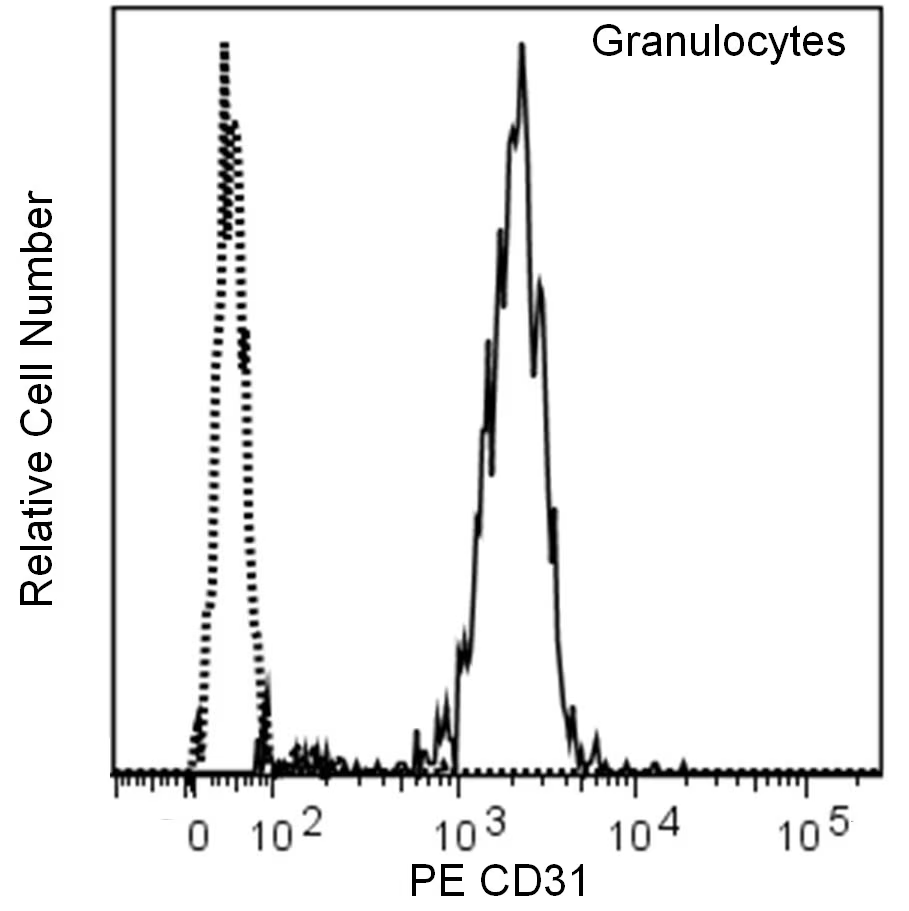


1/2
Hu CD31 PE MBC 78.2 25Tst


品牌: BD Pharmingen
 用小程序,查商品更便捷



 收藏
收藏
 对比
对比 咨询
咨询反应种属:
Human (QC Testing)
来源宿主:
Mouse BALB/c IgG1, κ
产品介绍
产品使用步骤推荐 产品介绍
产品信息
荧光素标记
抗原名称
CD31

宿主
Mouse BALB/c IgG1, κ
免疫原
Human CD31
简单描述
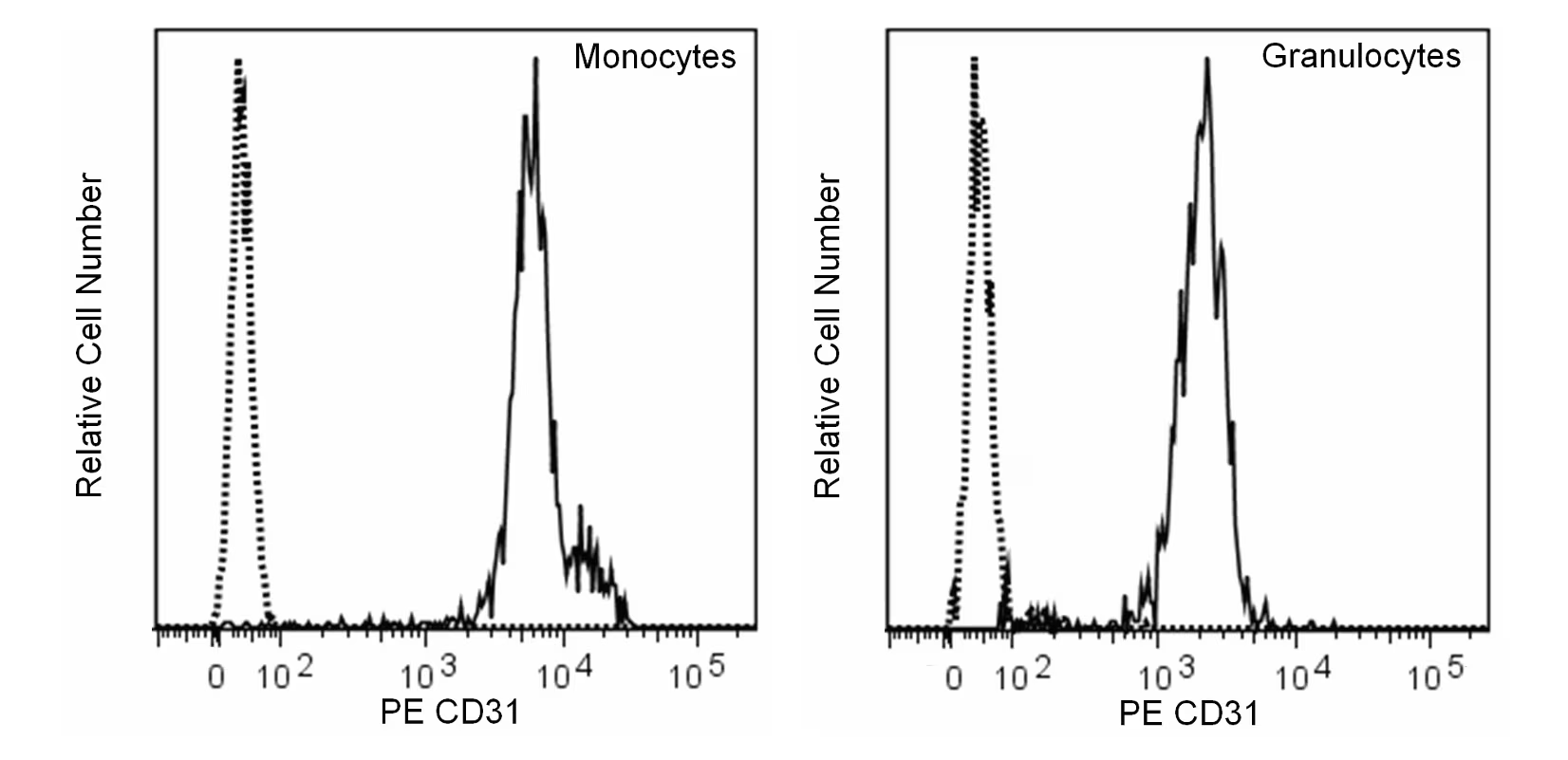
The MBC 78.2 monoclonal antibody recognizes CD31 which is also known as, Platelet endothelial cell adhesion molecule (PECAM-1), platelet GPIIa, or EndoCAM. CD31 is a ~130 kDa type I transmembrane glycoprotein that belongs to the Ig gene superfamily. CD31 is comprised of an extracellular region with six IgC-like domains, a transmembrane region, and a cytoplasmic domain that contains two immunoreceptor tyrosine-based inhibitory motifs (ITIMs). The MBC 78.2 antibody specifically binds to an epitope located on membrane-proximal, extracellular Ig-like domain 6 of CD31. This epitope remains expressed by activated T cells after enzymatic cleavage and shedding of a soluble extracellular CD31 fragment comprised of Ig-like domains 1 to 5 from cells. In contrast to the MBC 78.2 antibody, the WM59 monoclonal antibody reportedly binds to the extracellular Ig-like domain 2 of CD31. WM59 can thus bind to cells that express intact CD31 but not to cells that express a truncated form CD31 that lacks at least the membrane distal Ig-like domains 1 and 2 of CD31. CD31 has wide tissue distribution and is expressed on platelets, monocytes, granulocytes, some T cell subsets, and at high levels on endothelial cells. This cell adhesion molecule has been implicated in a number of cellular phenomena, including vascular wound healing. angiogenesis, transendothelial migration of leucocytes, and the regulation of T cell responses.
商品描述
MBC 78.2
The MBC 78.2 monoclonal antibody recognizes CD31 which is also known as, Platelet endothelial cell adhesion molecule (PECAM-1), platelet GPIIa, or EndoCAM. CD31 is a ~130 kDa type I transmembrane glycoprotein that belongs to the Ig gene superfamily. CD31 is comprised of an extracellular region with six IgC-like domains, a transmembrane region, and a cytoplasmic domain that contains two immunoreceptor tyrosine-based inhibitory motifs (ITIMs). The MBC 78.2 antibody specifically binds to an epitope located on membrane-proximal, extracellular Ig-like domain 6 of CD31. This epitope remains expressed by activated T cells after enzymatic cleavage and shedding of a soluble extracellular CD31 fragment comprised of Ig-like domains 1 to 5 from cells. In contrast to the MBC 78.2 antibody, the WM59 monoclonal antibody reportedly binds to the extracellular Ig-like domain 2 of CD31. WM59 can thus bind to cells that express intact CD31 but not to cells that express a truncated form CD31 that lacks at least the membrane distal Ig-like domains 1 and 2 of CD31. CD31 has wide tissue distribution and is expressed on platelets, monocytes, granulocytes, some T cell subsets, and at high levels on endothelial cells. This cell adhesion molecule has been implicated in a number of cellular phenomena, including vascular wound healing. angiogenesis, transendothelial migration of leucocytes, and the regulation of T cell responses.
同种型
Mouse BALB/c IgG1, κ
克隆号
克隆 MBC 78.2 (also known as PECAM-1.2; 1.2) (RUO)
产品详情
PE
R-Phycoerythrin (PE), is part of the BD family of Phycobiliprotein dyes. This fluorochrome is a multimeric fluorescent phycobiliprotein with excitation maximum (Ex Max) of 496 nm and 566 nm and an emission maximum (Em Max) at 576 nm. PE is designed to be excited by the Blue (488 nm), Green (532 nm) and Yellow-Green (561 nm) lasers and detected using an optical filter centered near 575 nm (e.g., a 575/26-nm bandpass filter). As PE is excited by multiple lasers, this can result in cross-laser excitation and fluorescence spillover on instruments with various combinations of Blue, Green, and Yellow-Green lasers. Please ensure that your instrument’s configurations (lasers and optical filters) are appropriate for this dye.

PE
496 nm, 566 nm
576 nm
BD化合物表
{}
应用
实验应用
Flow cytometry (Routinely Tested)
推荐用量
5 µl
反应种属
Human (QC Testing)
目标/特异性
CD31 (PECAM-1)
背景
别名
PECAM-1; PECAM1; EndoCAM; GPIIA'
制备和贮存
存储溶液
Aqueous buffered solution containing BSA and ≤0.09% sodium azide.
保存方式
Aqueous buffered solution containing BSA and ≤0.09% sodium azide.
文献
文献
研发参考(7)
1. DeLisser HM, Chilkotowsky J, Yan HC, Daise ML, Buck CA, Albelda SM. Deletions in the cytoplasmic domain of platelet-endothelial cell adhesion molecule-1 (PECAM-1, CD31) result in changes in ligand binding properties.. J Cell Biol. 1994; 124(1-2):195-203. (Immunogen: Flow cytometry, Functional assay, Inhibition).
2. Fawcett J, Buckley C, Holness CL, et al. Mapping the homotypic binding sites in CD31 and the role of CD31 adhesion in the formation of interendothelial cell contacts. J Cell Biol. 1995; 128(6):1229-1241. (Biology).
3. Fornasa G, Groyer E, Clement M, et al. TCR stimulation drives cleavage and shedding of the ITIM receptor CD31. J Immunol. 2010; 184(10):5485-5492. (Clone-specific: Cytometric Bead Array, Flow cytometry, Immunofluorescence).
4. Newman PJ, Paddock C. CD31 cluster workshop report. In: Schlossman SF. Stuart F. Schlossman .. et al., ed. Leucocyte typing V : white cell differentiation antigens : proceedings of the fifth international workshop and conference held in Boston, USA, 3-7 November, 1993. Oxford: Oxford University Press; 1995:1259-1260.
5. Tanaka Y, Albelda SM, Horgan KJ, et al. CD31 expressed on distinctive T cell subsets is a preferential amplifier of beta 1 integrin-mediated adhesion.. J Exp Med. 1992; 176(1):245-53. (Clone-specific: Activation, Functional assay).
6. Yan H-C, Newman PJ, Albelda SM. Epitope mapping of CD31 (PECAM-1) mAb. In: Schlossman SF. Stuart F. Schlossman .. et al., ed. Leucocyte typing V : white cell differentiation antigens : proceedings of the fifth international workshop and conference held in Boston, USA, 3-7 November, 1993. Oxford: Oxford University Press; 1995:1261-1262.
7. Yan HC, Pilewski JM, Zhang Q, DeLisser HM, Romer L, Albelda SM. Localization of multiple functional domains on human PECAM-1 (CD31) by monoclonal antibody epitope mapping.. Cell Adhes Commun. 1995; 3(1):45-66. (Clone-specific: Immunoprecipitation).
声明 :本官网所有报价均为常温或者蓝冰运输价格,如有产品需要干冰运输,需另外加收干冰运输费。