




 全部商品分类
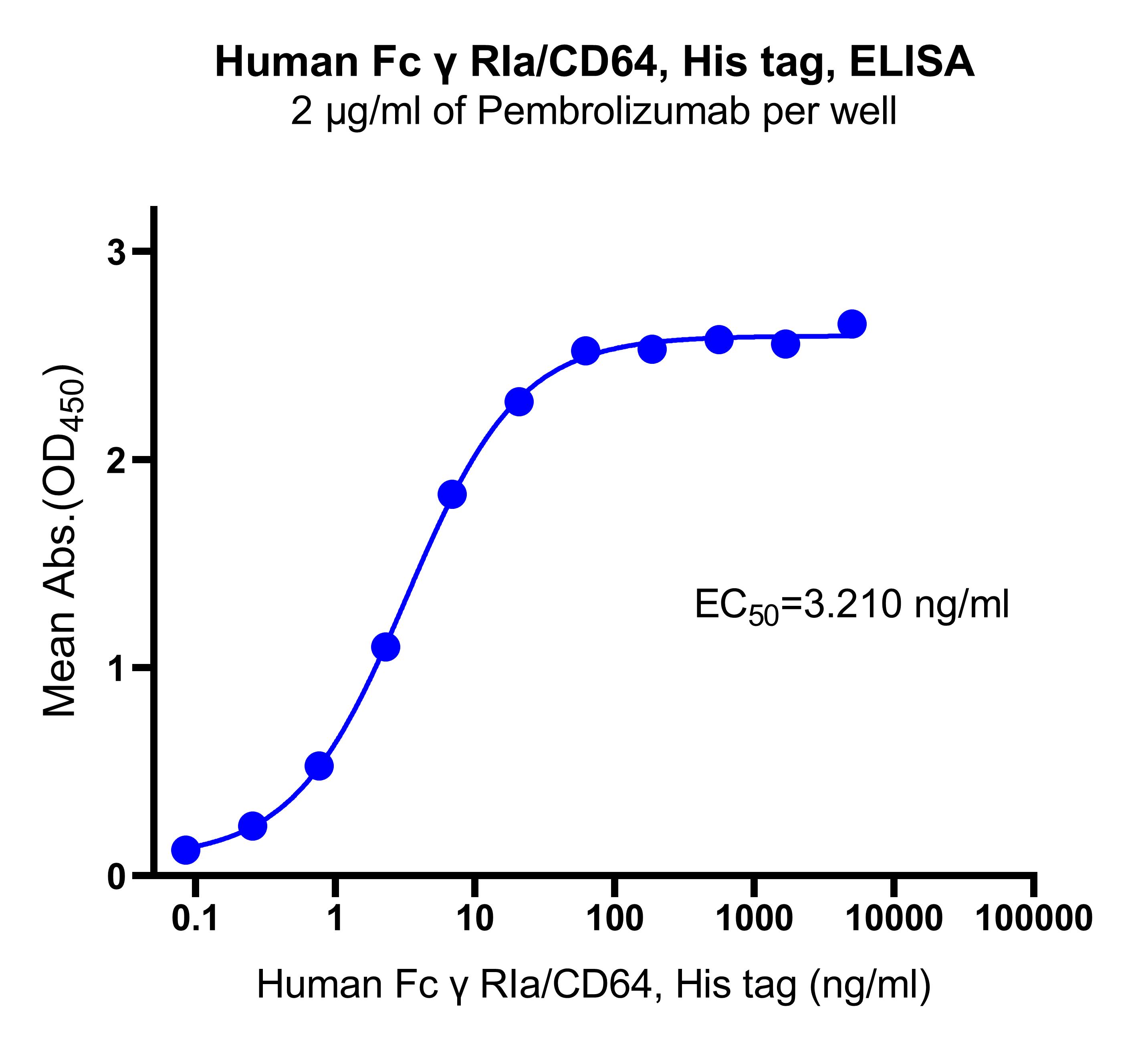


Fc γ RIa/CD64 His Tag Protein, Human


 用小程序,查商品更便捷



 收藏
收藏
 对比
对比 咨询
咨询Protein sequence (P12314, Gln16-His292, with C-10*His) QVDTTKAVITLQPPWVSVFQEETVTLHCEVLHLPGSSSTQWFLNGTATQTSTPSYRITSASVNDSGEYRCQRGLSGRSDPIQLEIHRGWLLLQVSSRVFTEGEPLALRCHAWKDKLVYNVLYYRNGKAFKFFHWNSNLTILKTNISHNGTYHCSGMGKHRYTSAGISVTVKELFPAPVLNASVTSPLLEGNLVTLSCETKLLLQRPGLQLYFSFYMGSKTLRGRNTSSEYQILTARREDSGLYWCEAATEDGNVLKRSPELELQVLGLQLPTPVWFHGGGGSHHHHHHHHHH

Lyophilized from a 0.2 μm filtered solution of 0.2M PBS, pH7.4.
2 μg(R: reducing conditions)
"}]CD64 (Cluster of Differentiation 64) is a type of integral membrane glycoprotein known as an Fc receptor that binds monomeric IgG-type antibodies with high affinity. It is more commonly known as Fc-gamma receptor 1 (FcγRI). After binding IgG, CD64 interacts with an accessory chain known as the common γ chain (γ chain), which possesses an ITAM motif that is necessary for triggering cellular activation. Structurally CD64 is composed of a signal peptide that allows its transport to the surface of a cell, three extracellular immunoglobulin domains of the C2-type that it uses to bind antibody, a hydrophobic transmembrane domain, and a short cytoplasmic tail. CD64 is constitutively found on only macrophages and monocytes, but treatment of polymorphonuclear leukocytes with cytokines like IFNγ and G-CSF can induce CD64 expression on these cells.
12 months from date of receipt, -20 to -70 °C as supplied. 6 months, -20 to -70 °C under sterile conditions after reconstitution. 1 week, 2 to 8 °C under sterile conditions after reconstitution. Please avoid repeated freeze-thaw cycles.