




 全部商品分类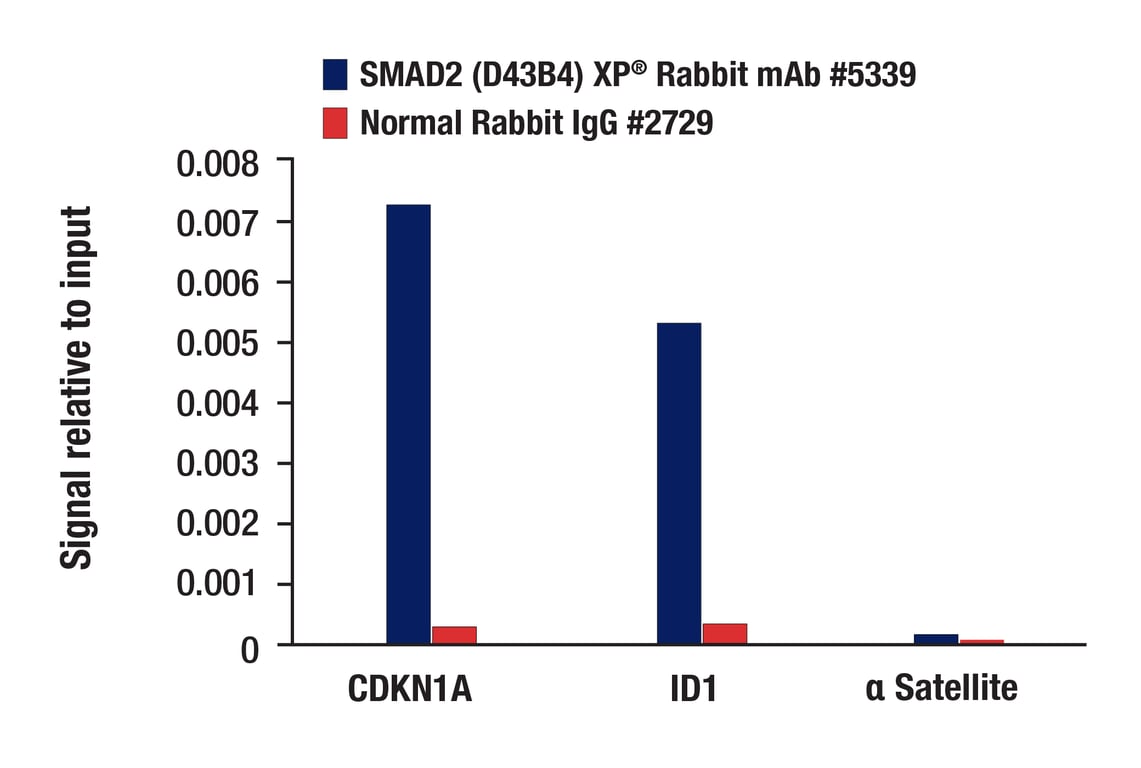


1/6


 用小程序,查商品更便捷





产品介绍
产品介绍
产品信息
荧光素标记
Unconjugated

抗原名称
Smad2
来源纯化
Monoclonal antibody is produced by immunizing animals with a synthetic peptide corresponding to residues near the amino terminus of mouse SMAD2 protein.
宿主
Rabbit
商品描述
Product Usage Information
For optimal ChIP results, use 10 μl of antibody and 10 μg of chromatin (approximately 4 x 10⁶ cells) per IP. This antibody has been validated using SimpleChIP® Enzymatic Chromatin IP Kits.
| Application | Dilution |
|---|---|
| Western Blotting | 1:1000 |
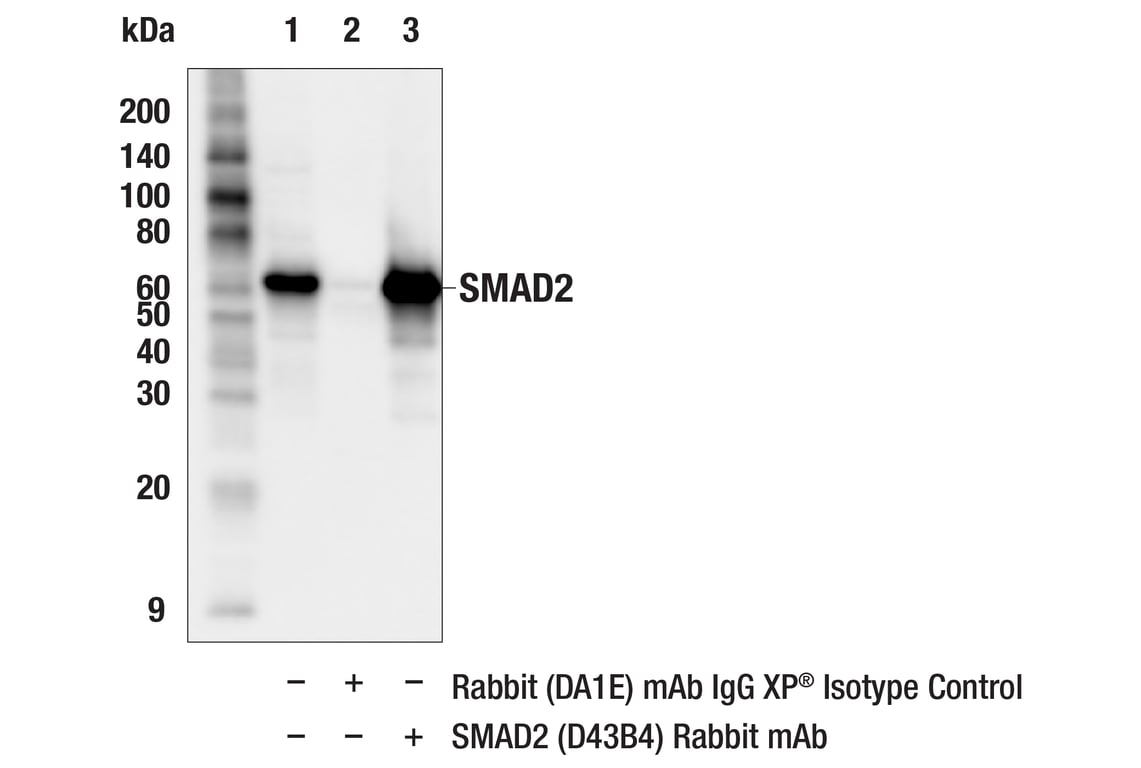
| Immunoprecipitation | 1:50 |
| Immunofluorescence (Immunocytochemistry) | 1:50 - 1:200 |
| Flow Cytometry (Fixed/Permeabilized) | 1:100 - 1:400 |
| Chromatin IP | 1:50 |
同种型
Rabbit IgG
分子量
60
研究领域
癌症,发育生物学与干细胞研究,纤维化,神经科学,
应用
反应种属
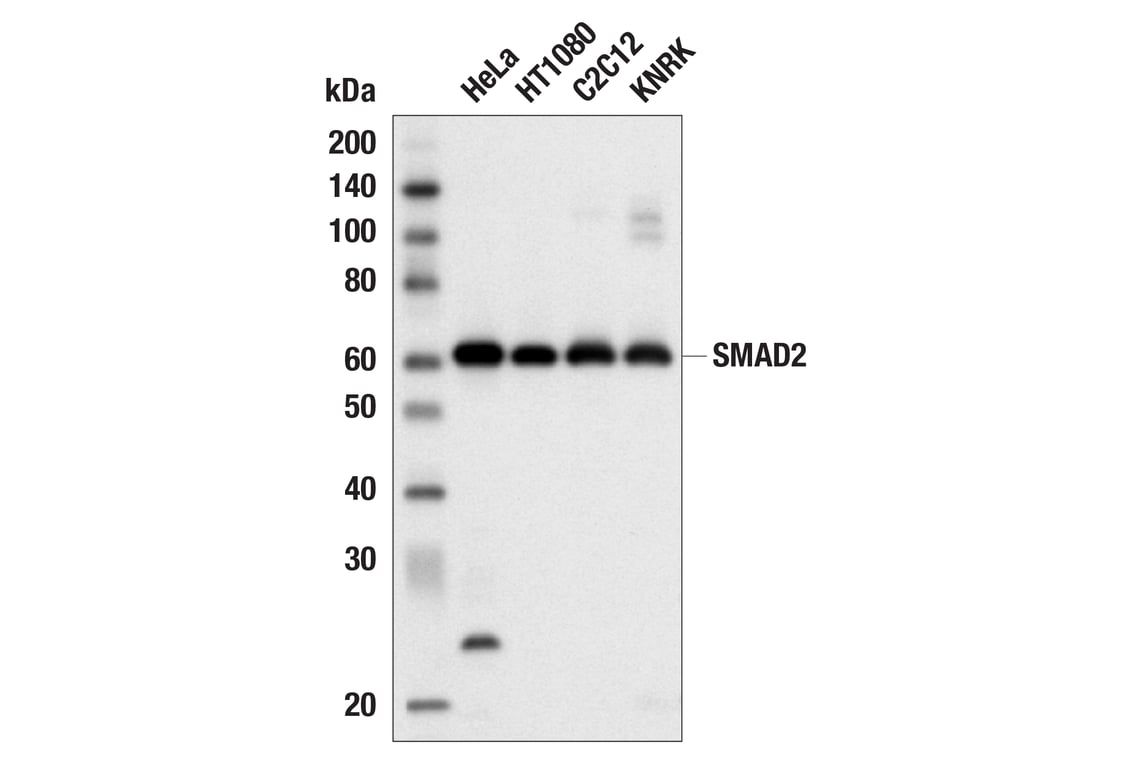
Human,Mouse,Rat,Monkey,
目标/特异性
Specificity/Sensitivity
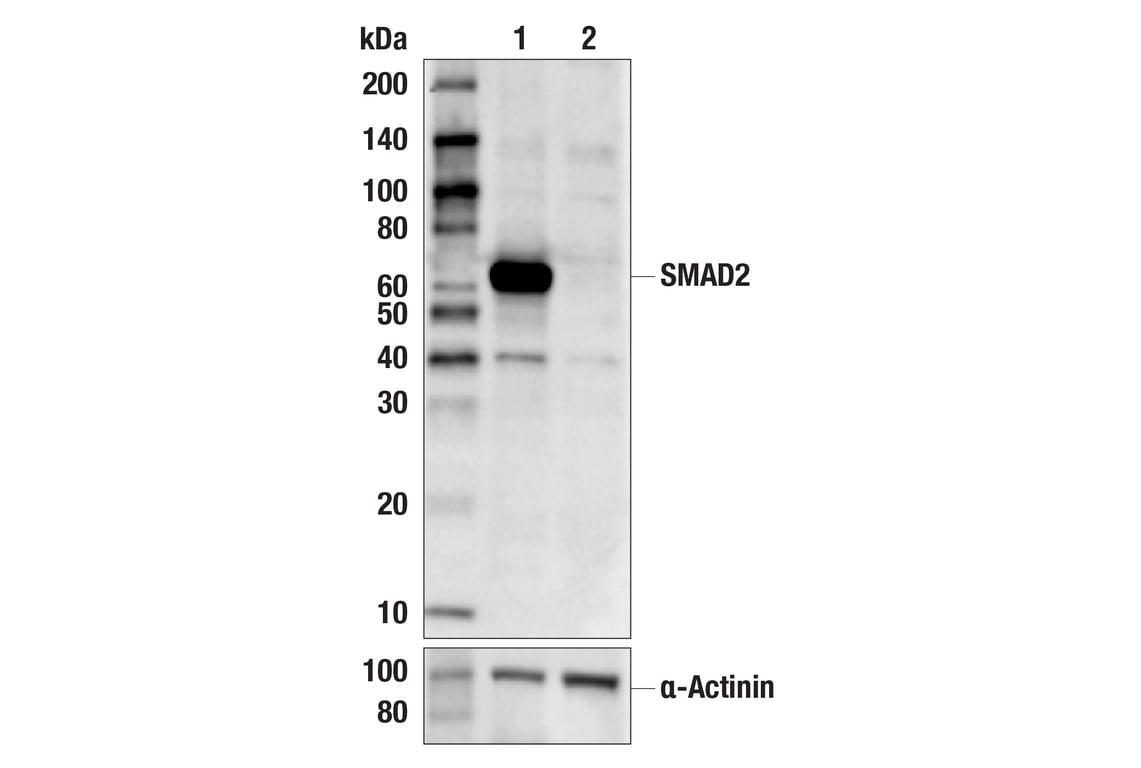
SMAD2 (D43B4) XP Rabbit mAb detects endogenous levels of total SMAD2 protein. This antibody does not cross-react with SMAD3.
Species Reactivity:
Human, Mouse, Rat, Monkey
敏感性
Endogenous
背景
背景
Members of the SMAD family of signal transduction molecules are components of a critical intracellular pathway that transmit TGF-β signals from the cell surface into the nucleus. Three distinct classes of SMADs have been defined: the receptor-regulated SMADs (R-SMADs), which include SMAD1, 2, 3, 5, and 9; the common-mediator SMAD (co-SMAD), SMAD4; and the antagonistic or inhibitory SMADs (I-SMADs), SMAD6 and 7 (1-5). Activated type I receptors associate with specific R-SMADs and phosphorylate them on a conserved carboxy-terminal SSXS motif. The phosphorylated R-SMADs dissociate from the receptor and form a heteromeric complex with SMAD4, initiating translocation of the heteromeric SMAD complex to the nucleus. Once in the nucleus, SMADs recruit a variety of DNA binding proteins that function to regulate transcriptional activity (6-8).
1.Heldin, C.H. et al. (1997) Nature 390, 465-71.
2.Attisano, L. and Wrana, J.L. (1998) Curr Opin Cell Biol 10, 188-94.
3.Derynck, R. et al. (1998) Cell 95, 737-40.
4.Massagué, J. (1998) Annu Rev Biochem 67, 753-91.
5.Whitman, M. (1998) Genes Dev 12, 2445-62.
6.Wrana, J.L. (2000) Sci STKE 2000, re1.
7.Attisano, L. and Wrana, J.L. (2002) Science 296, 1646-7.
8.Moustakas, A. et al. (2001) J Cell Sci 114, 4359-69.
研究领域
癌症,发育生物学与干细胞研究,纤维化,神经科学,
翻译后修饰
unmodified
制备和贮存
保存方式
Supplied in 10 mM sodium HEPES (pH 7.5), 150 mM NaCl, 100 µg/ml BSA, 50% glycerol and less than 0.02% sodium azide. Store at –20°C. Do not aliquot the antibody.
For a carrier free (BSA and azide free) version of this product see product #83065.
数据库链接
Entrez-Gene ID
17126
UniProt ID
Q62432
声明 :本官网所有报价均为常温或者蓝冰运输价格,如有产品需要干冰运输,需另外加收干冰运输费。