




 全部商品分类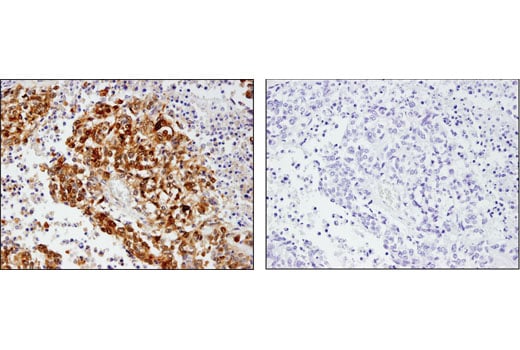


1/8
Phospho-YAP (Ser127) (D9W2I) Rabbit mAb


品牌: CST
 用小程序,查商品更便捷



 收藏
收藏
 对比
对比 咨询
咨询分子量:
65-78
反应种属:
Human,Mouse,Rat,
产品介绍
产品介绍
产品信息
荧光素标记
Unconjugated

抗原名称
YAP
来源纯化
Monoclonal antibody is produced by immunizing animals with a synthetic phosphopeptide corresponding to residues surrounding Ser127 of human YAP protein.
宿主
Rabbit
商品描述
Product Usage Information
| Application | Dilution |
|---|---|
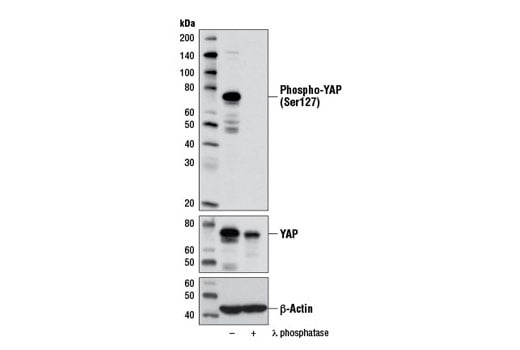
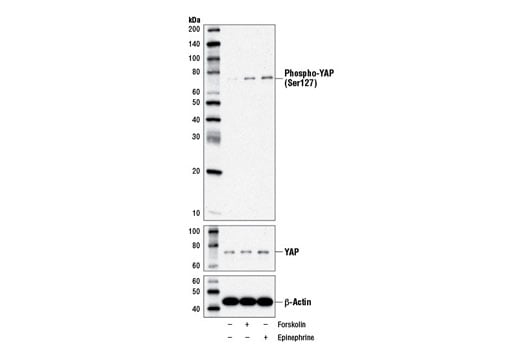
| Western Blotting | 1:1000 |
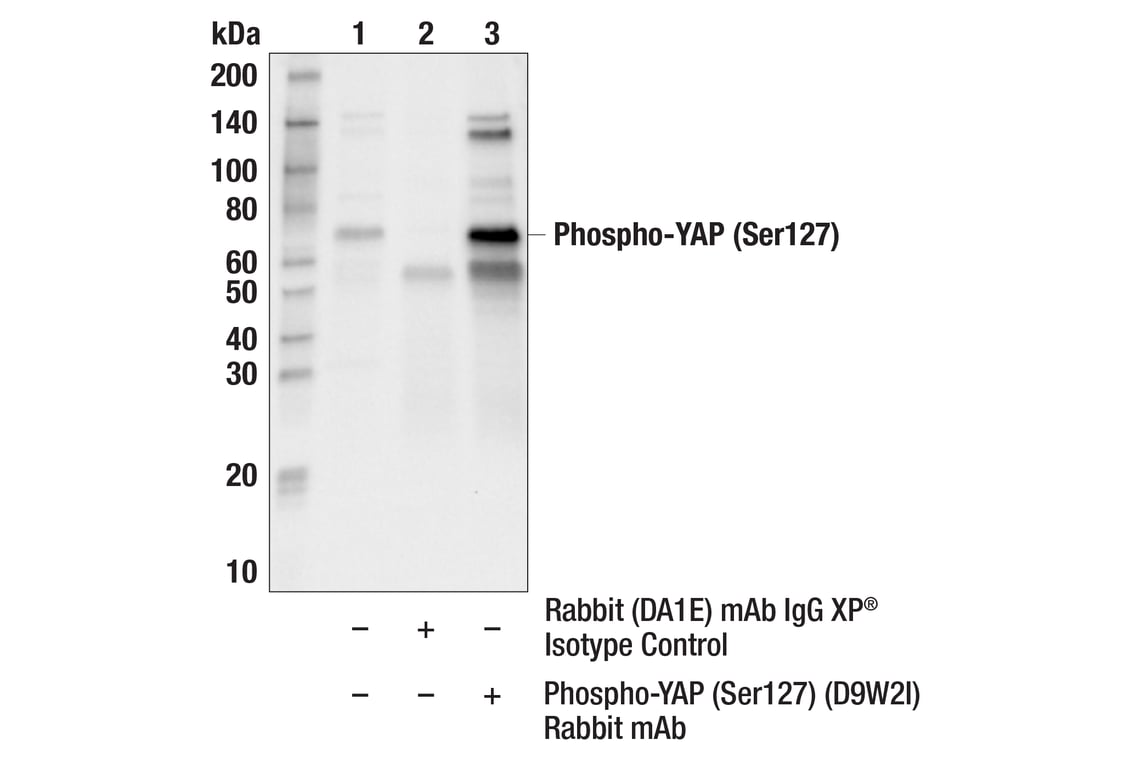
| Immunoprecipitation | 1:200 |
| Immunohistochemistry (Paraffin) | 1:625 - 1:2500 |
同种型
Rabbit IgG
分子量
65-78
研究领域
癌症,发育生物学与干细胞研究,纤维化,神经科学,
应用
反应种属
Human,Mouse,Rat,
目标/特异性
Specificity/Sensitivity
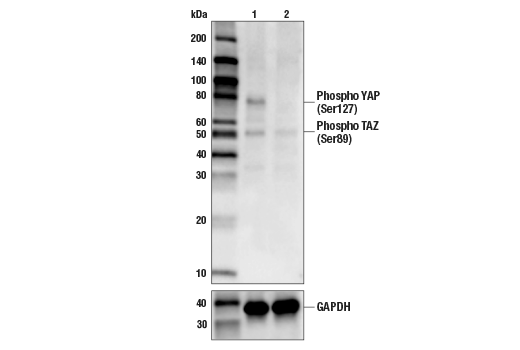
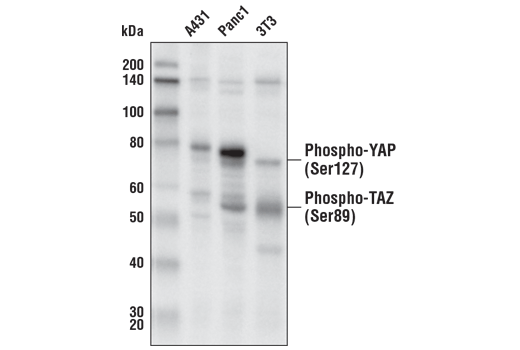
Phospho-YAP (Ser127) (D9W2I) Rabbit mAb recognizes endogenous levels of YAP protein only when phosphorylated at Ser127. This antibody may cross-react with phospho-TAZ (Ser89).
Species Reactivity:
Human, Mouse, Rat
敏感性
Endogenous
背景
背景
YAP (Yes-associated protein, YAP65) was first identified based on its ability to associate with the SH3 domain of Yes. It also binds to other SH3 domain-containing proteins such as Nck, Crk, Src, and Abl (1). In addition to the SH3 binding motif, YAP contains a PDZ interaction motif, a coiled-coil domain, and WW domains (2-4). While initial studies of YAP all pointed towards a role in anchoring and targeting to specific subcellular compartments, subsequent studies showed that YAP is a transcriptional co-activator by virtue of its WW domain interacting with the PY motif (PPxY) of the transcription factor PEBP2 and other transcription factors (5). In its capacity as a transcriptional co-activator, YAP is now widely recognized as a central mediator of the Hippo Pathway, which plays a fundamental and widely conserved role in regulating tissue growth and organ size (6-8). Phosphorylation at multiple sites (e.g., Ser109, Ser127) by LATS kinases promotes YAP translocation from the nucleus to the cytoplasm, where it is sequestered through association with 14-3-3 proteins (7-9). These LATS-driven phosphorylation events serve to prime YAP for subsequent phosphorylation by CK1δ/ε in an adjacent phosphodegron, triggering proteasomal degradation of YAP (10).
1.Sudol, M. (1994) Oncogene 9, 2145-52.
2.Mohler, P.J. et al. (1999) J Cell Biol 147, 879-90.
3.Espanel, X. and Sudol, M. (2001) J Biol Chem 276, 14514-23.
4.Sudol, M. et al. (1995) FEBS Lett 369, 67-71.
5.Yagi, R. et al. (1999) EMBO J 18, 2551-62.
6.Dong, J. et al. (2007) Cell 130, 1120-33.
7.Zhao, B. et al. (2010) Genes Dev 24, 862-74.
8.Zhao, B. et al. (2007) Genes Dev 21, 2747-61.
9.Yu, F.X. et al. (2012) Cell 150, 780-91.
10.Zhao, B. et al. (2010) Genes Dev 24, 72-85.
研究领域
癌症,发育生物学与干细胞研究,纤维化,神经科学,
翻译后修饰
phosphate
制备和贮存
保存方式
Supplied in 10 mM sodium HEPES (pH 7.5), 150 mM NaCl, 100 µg/ml BSA, 50% glycerol and less than 0.02% sodium azide. Store at –20°C. Do not aliquot the antibody.
For a carrier free (BSA and azide free) version of this product see product #92367.
数据库链接
Entrez-Gene ID
10413
UniProt ID
P46937
声明 :本官网所有报价均为常温或者蓝冰运输价格,如有产品需要干冰运输,需另外加收干冰运输费。